
Ranthambhore Dynasty
Machli and her cubs · 1998–2008
Every wildlife photographer has one animal that keeps calling them back. For Nanak Dhingra it was Machli — the tigress of the Ranthambhore lakes, later called the Queen of Ranthambhore and, by the end of her life, the most photographed tiger in the world. He first saw her as a cub beside her mother in 1998, and over the next ten years he returned again and again: to Rajbagh, Padam Talao and the ruins below the fort, to watch her raise one litter after another. These photographs are shown here in the order of her life.
The Queen Mother
Machli was born in the winter of 1996–97, one of three female cubs of a tigress who held the lakes and the Jhalra ravine below Ranthambhore Fort. That tigress had a mark on her cheek shaped like a fish — machli in Hindi — and the name passed to the daughter who inherited both the mark and the territory. Nanak Dhingra photographed the mother in 1998, in her prime, leaping through the long grass at Jhalra; the photograph of mother and daughter at the water was made that same year by his son Sahil, then a boy on his first safaris. By the end of 1999 the daughter had taken over the lakes, and the original Machli was never seen again.
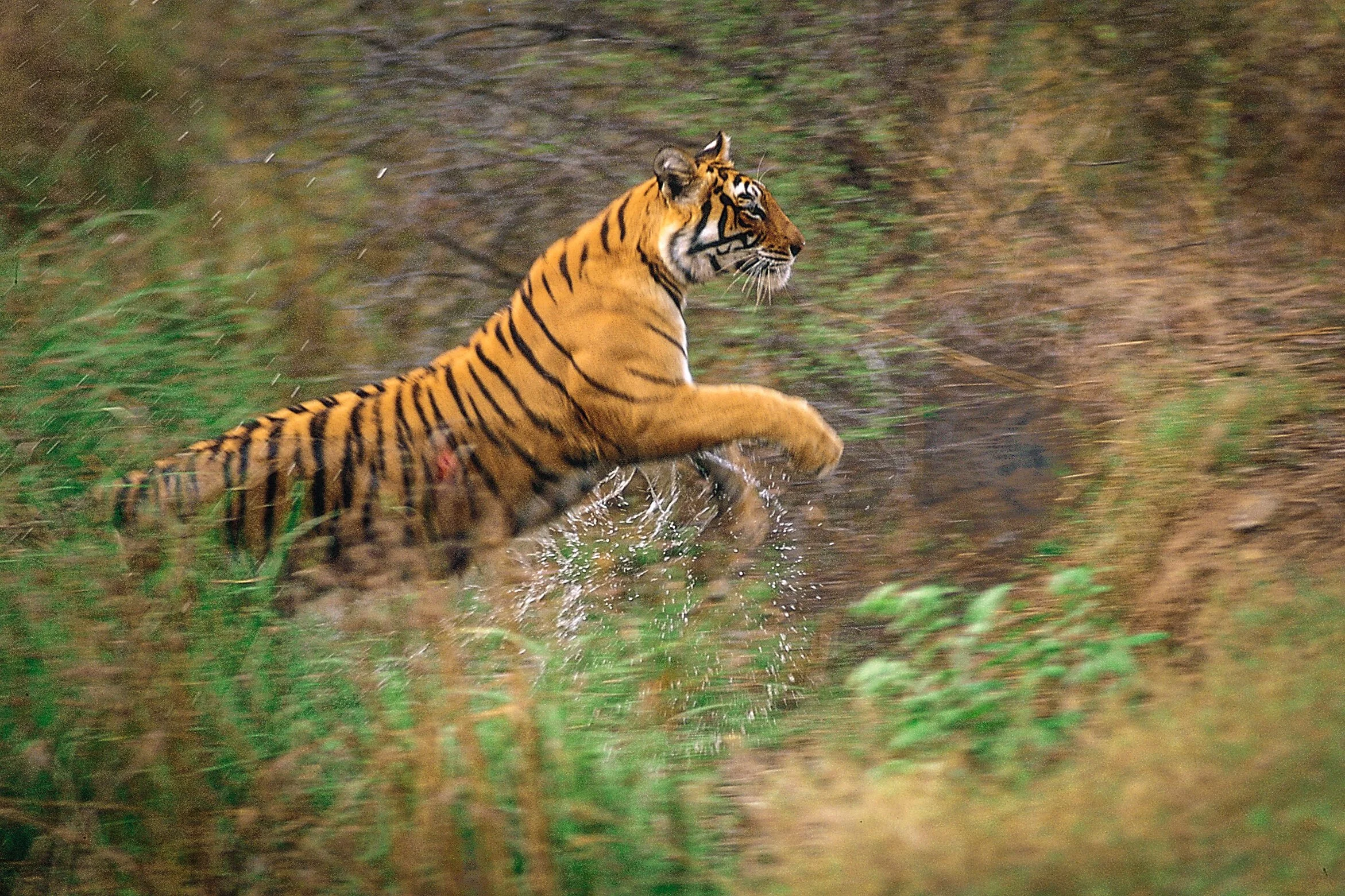
The Queen Mother — the Jhalra tigress, leaping through the grass · Ranthambhore, 1998
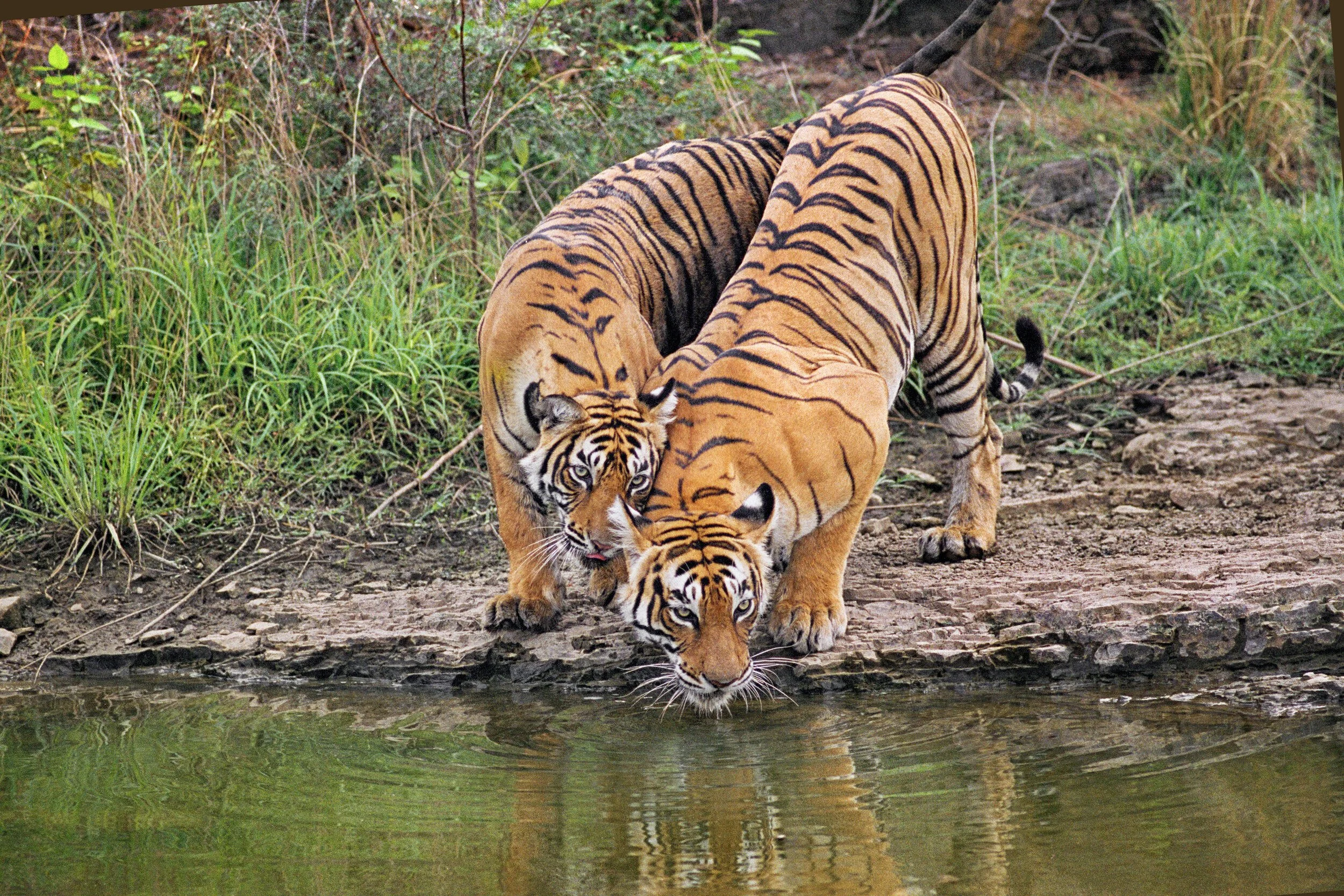
Machli, not yet two, with her mother at the water · Ranthambhore, 1998 · Photograph by Sahil Dhingra
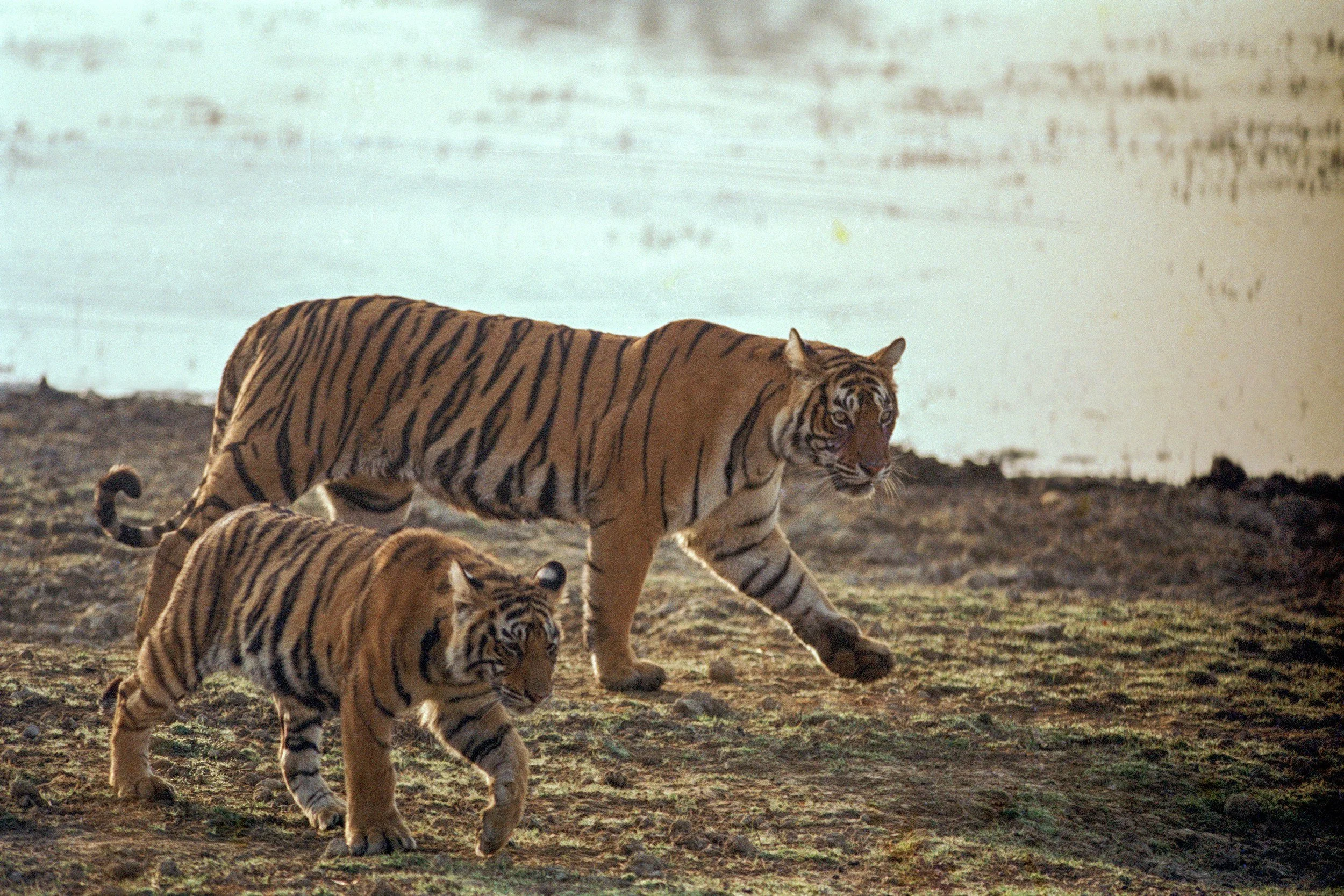
The Queen Mother with young Machli on the lakeshore · Ranthambhore, 1998
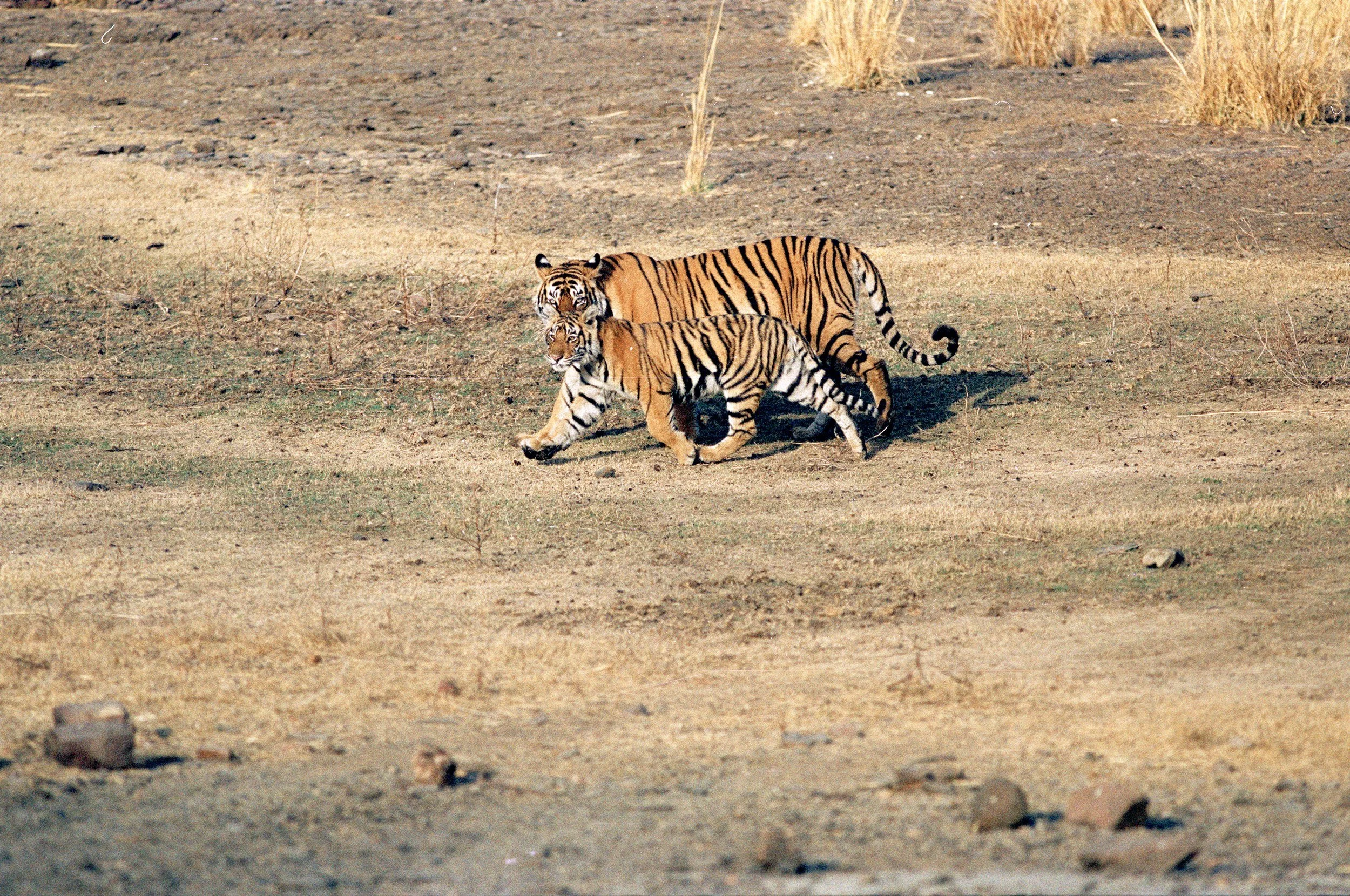
Mother and cub crossing the dry bed of the lake · 1998
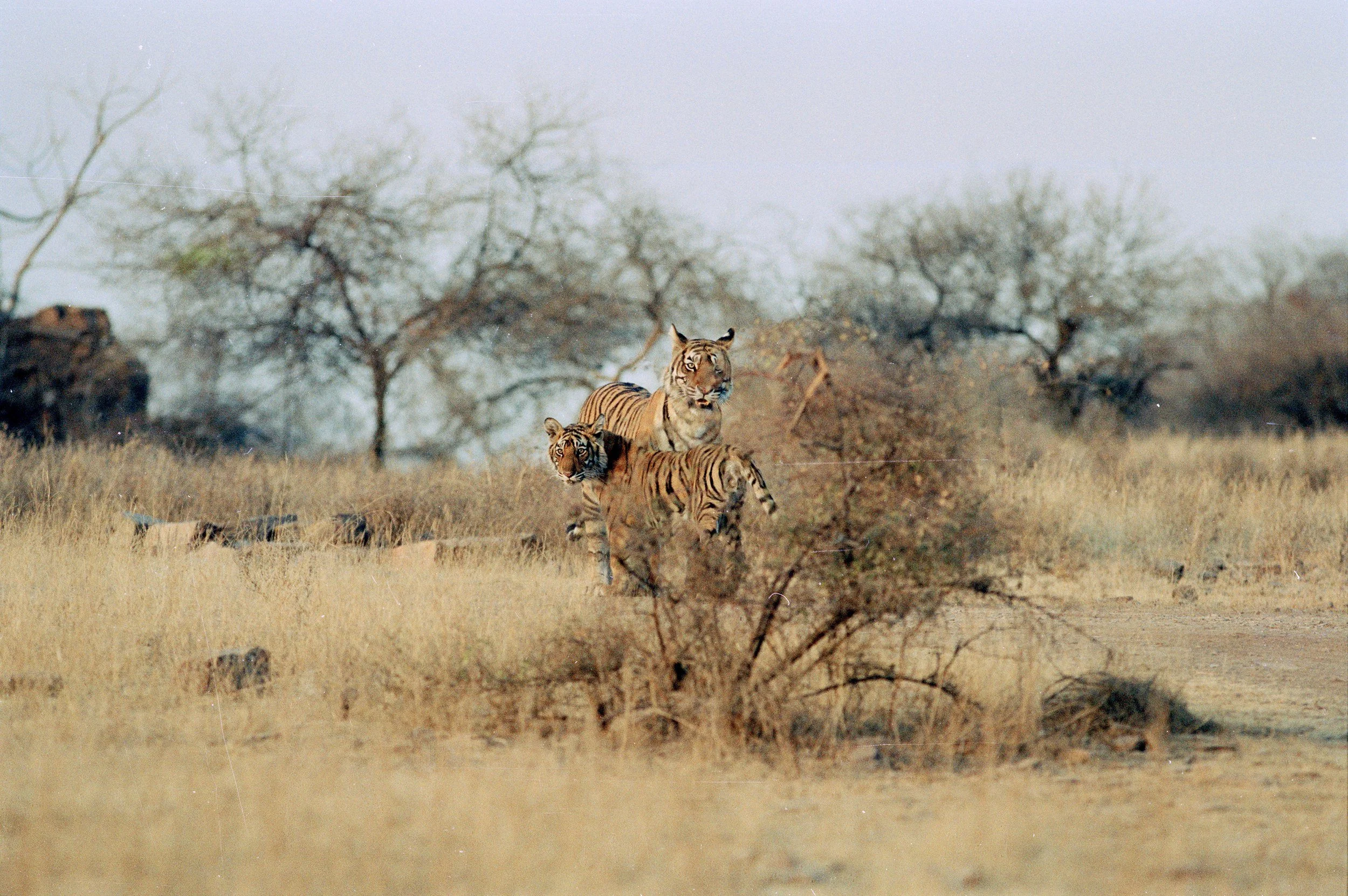
Mother and cub in the winter grass below the fort · 1998
First litter
Her first cubs came in the monsoon of 2000: two males, remembered as Broken Tail and Slant Ear. Broken Tail later left the park and became the subject of a BBC film; Slant Ear vanished soon after leaving his mother. In these frames, made on the dusty tracks near Rajbagh, she is a young mother of three or four, still learning the patience the job needs.
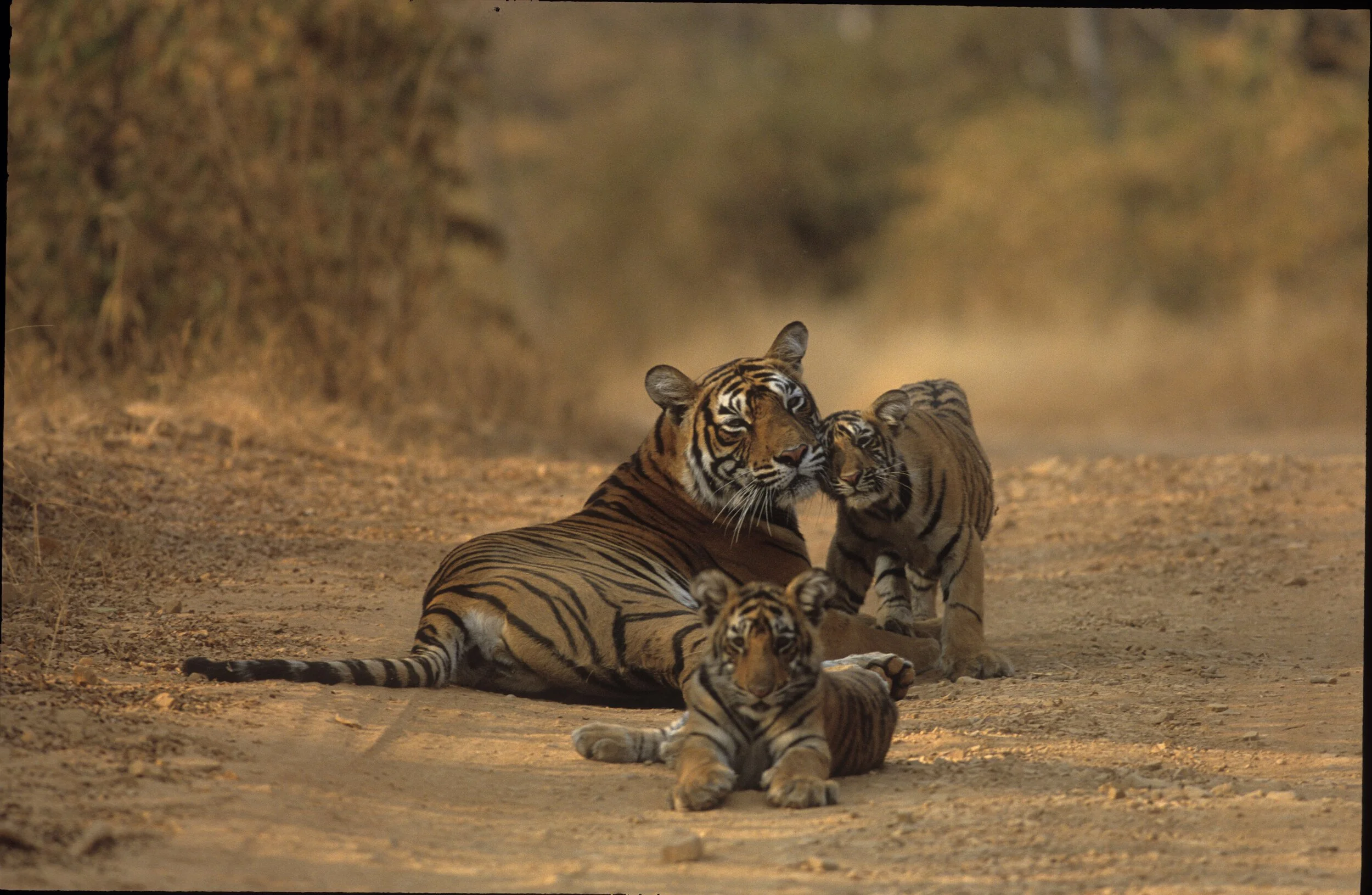
Machli with her first litter on the track near Rajbagh · 2000
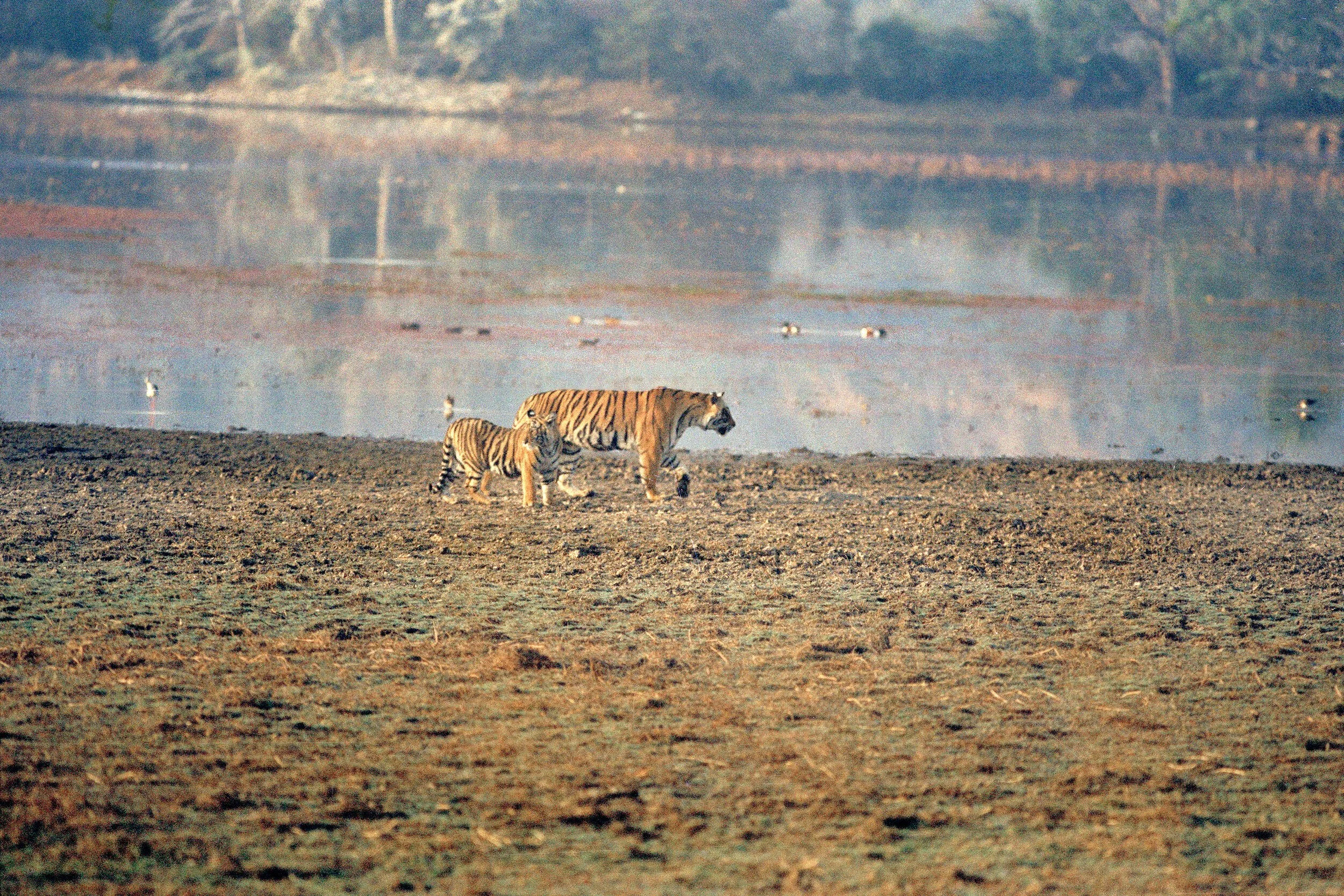
The family on the dry bed of Rajbagh lake · 2000
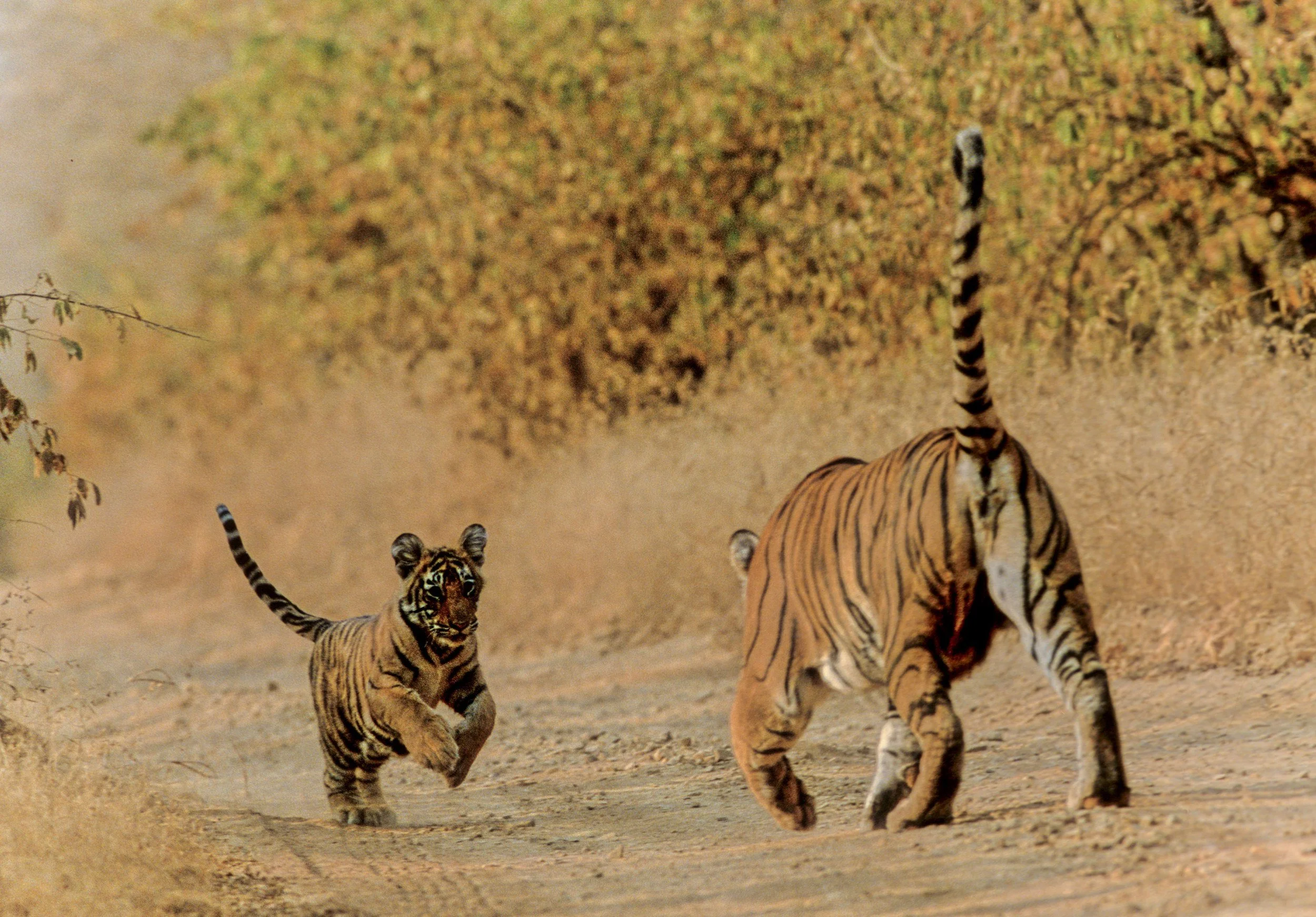
A cub of the first litter trotting after its mother · 2000
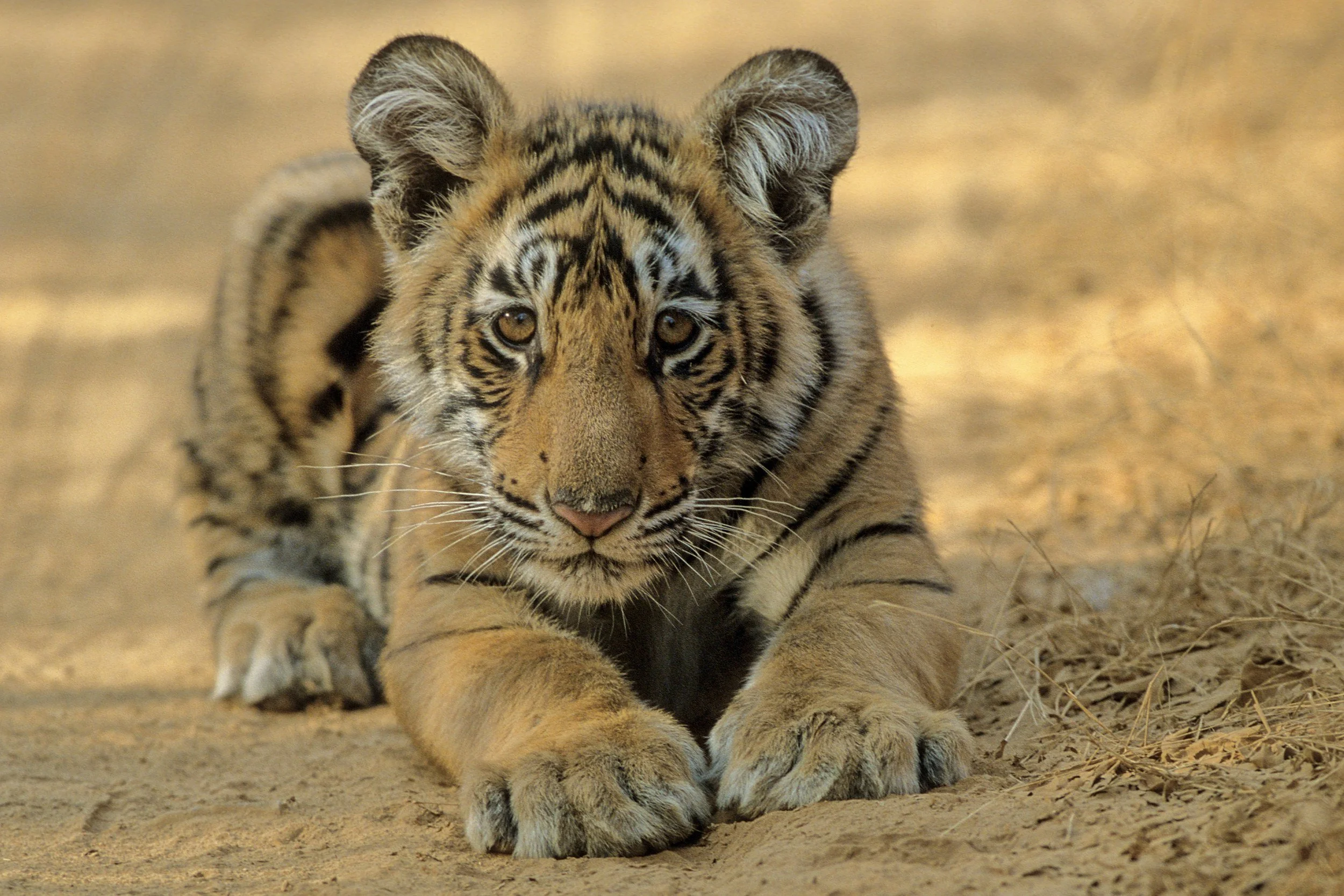
One of the two cubs, a few months old · 2000
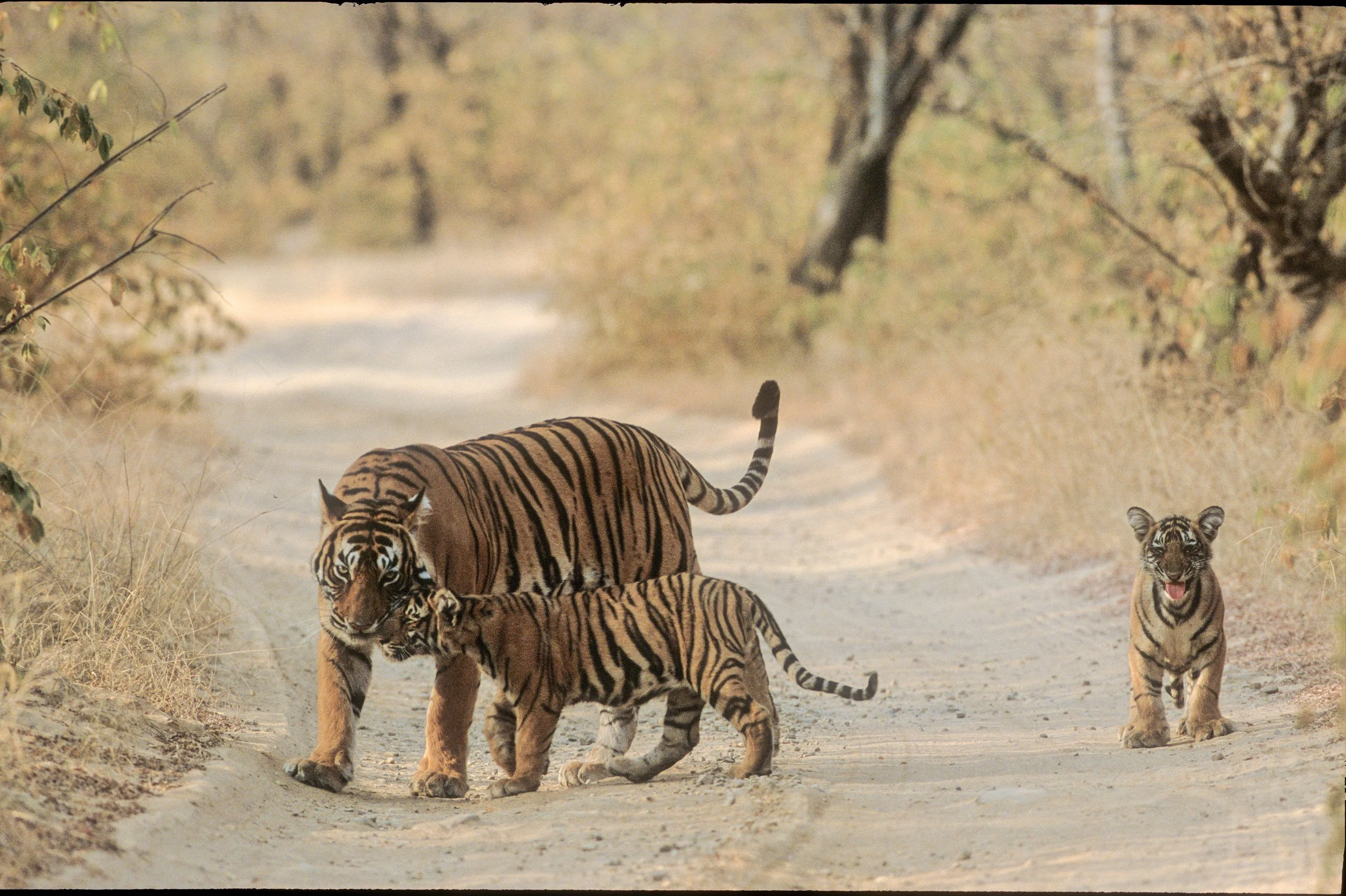
Machli leading the two cubs down the forest track · 2000
Second litter
Her second litter, a male called Jhumroo and a female called Jhumree, were born around 2002 and grew up in the hardest years Ranthambhore had seen: poachers emptied parts of the park in 2004, and Jhumree disappeared then. Jhumroo (T-20) survived to become the biggest male in the park. The summer of 2003 was also the summer of the crocodile — the fight that made her famous — and these photographs were made in the months around it.
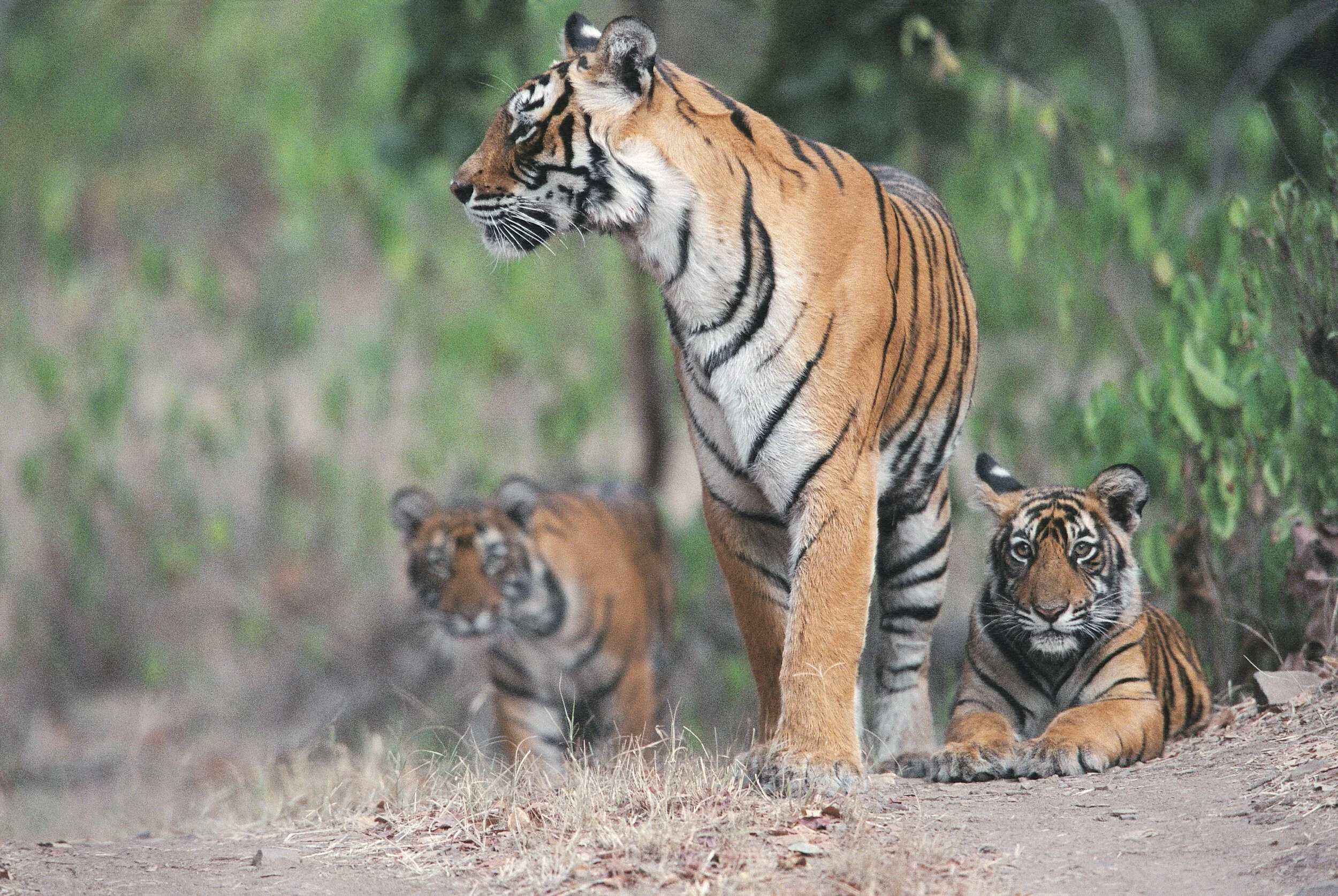
Machli with her second litter at the edge of the forest · 2003
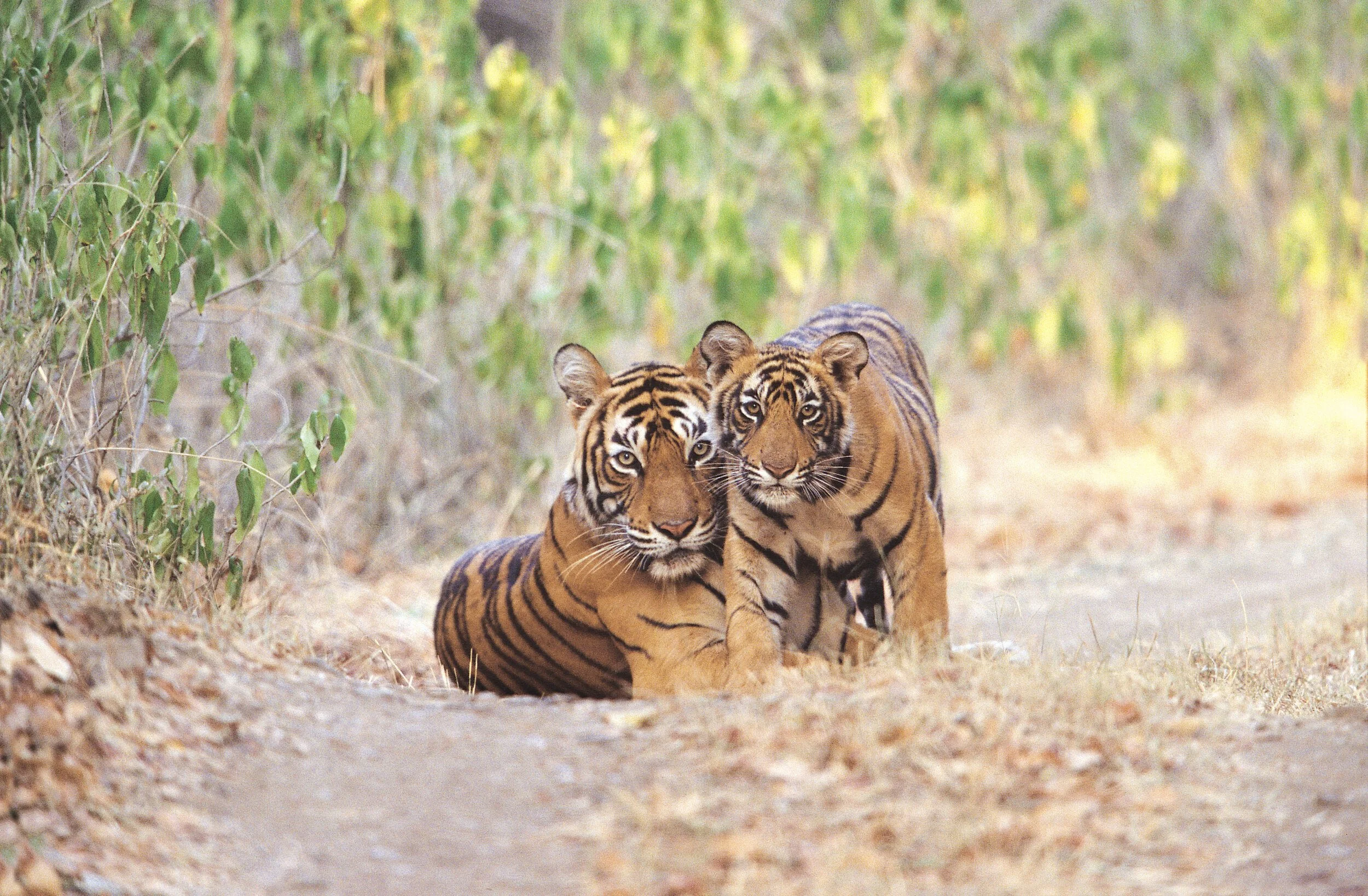
The two cubs of the second litter · 2003
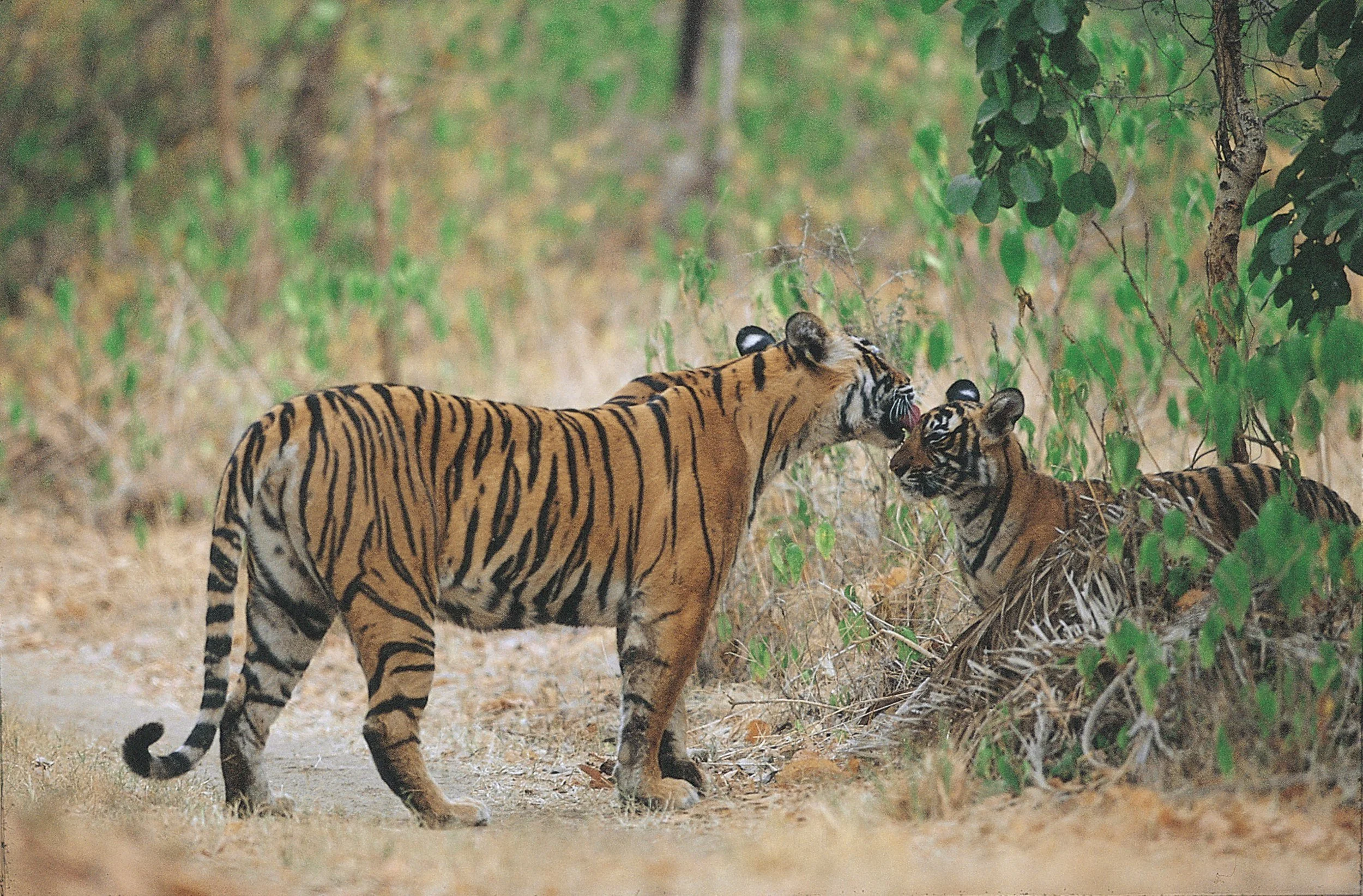
Machli with one of the second-litter cubs in the monsoon green · 2003
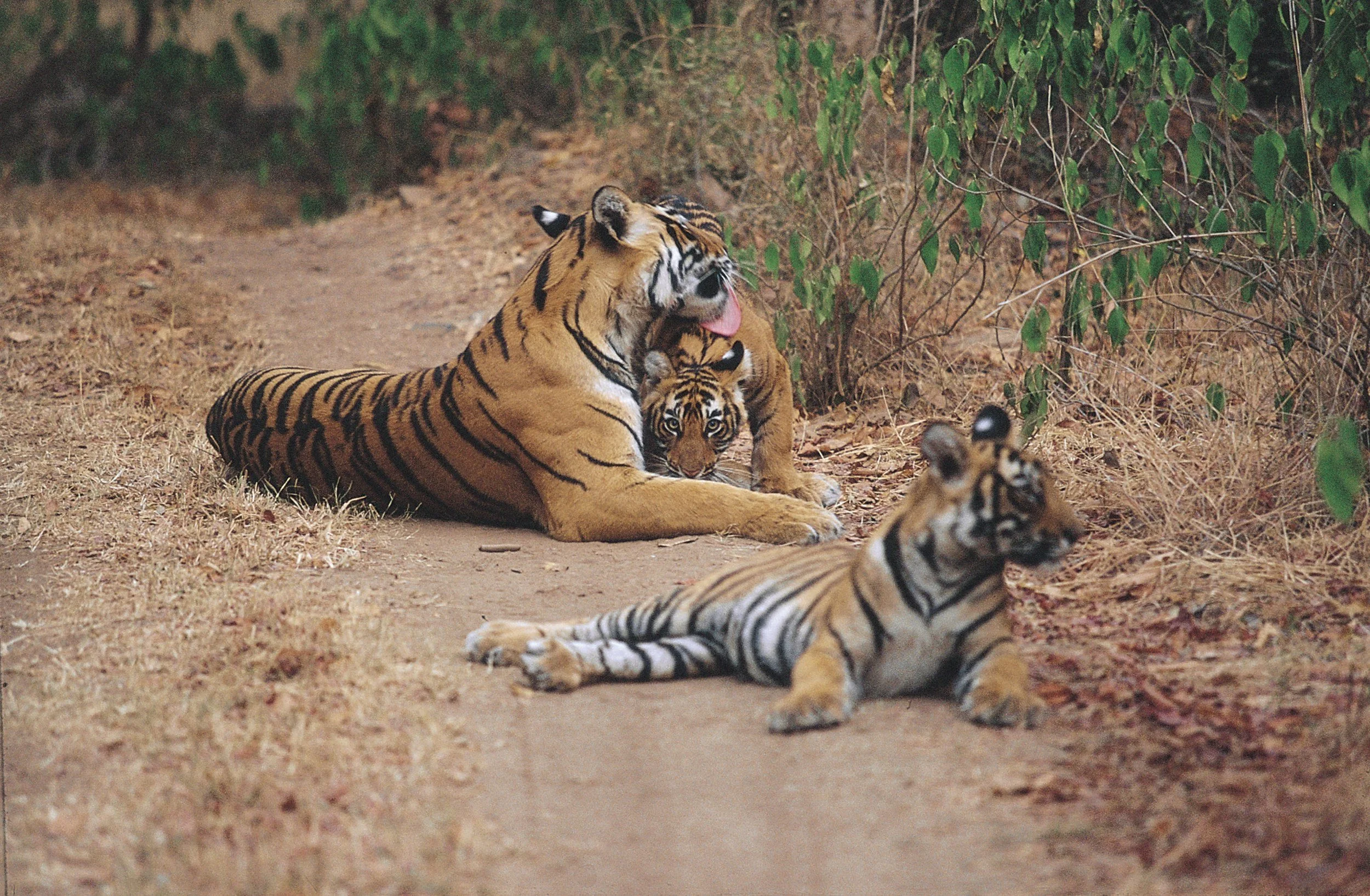
The family resting on the track · 2003
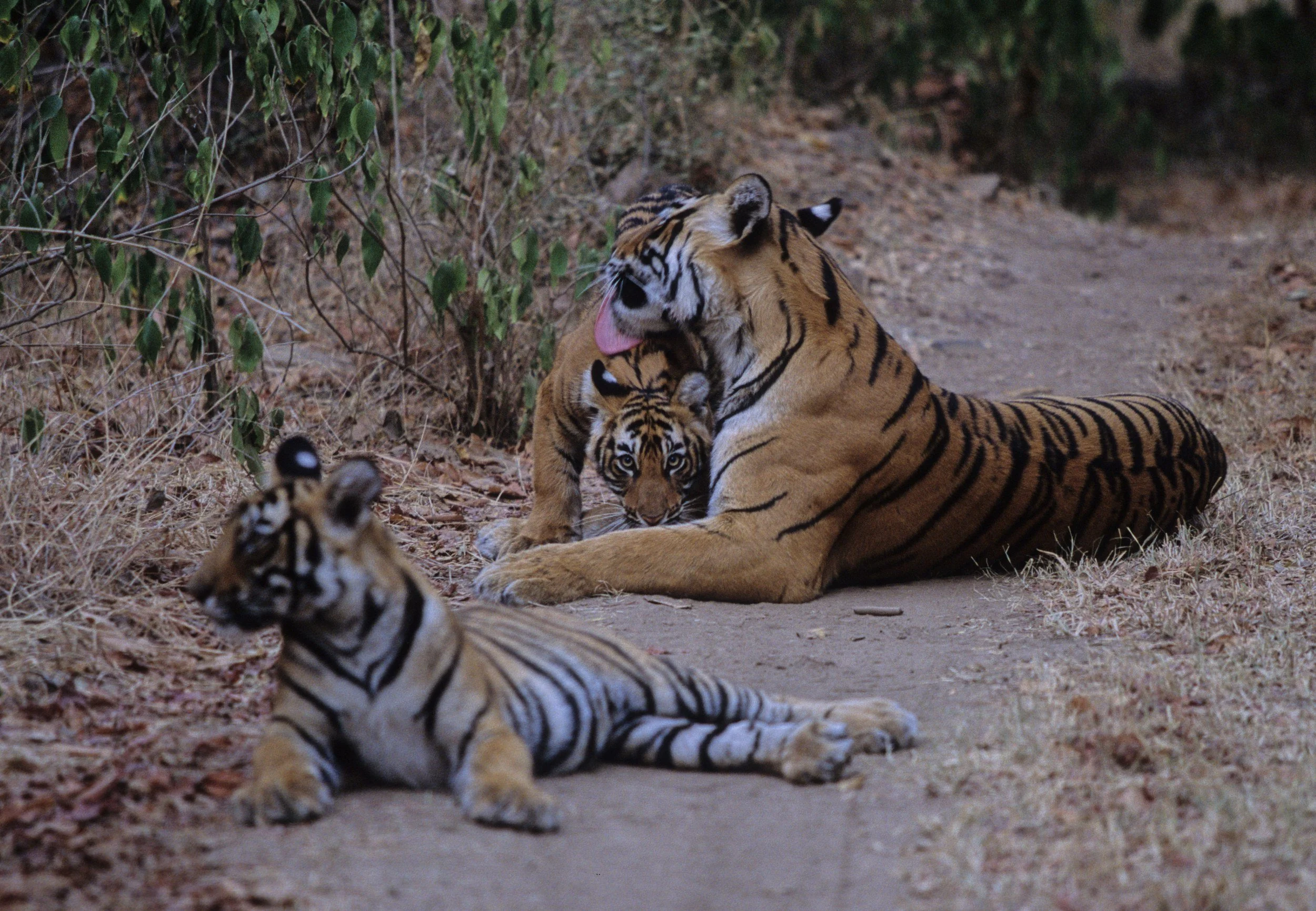
Machli with Jhumroo and Jhumree · 2003
The crocodile
In the summer of 2003, with the lakes shrinking, Machli fought a mugger crocodile at Rajbagh — a reptile said to have been fourteen feet long. The fight lasted close to an hour. She killed it, and she paid with two of her canine teeth, the beginning of the toothlessness that would mark her old age. Nanak Dhingra reached the lake soon after, and photographed her still lying beside the body in the mud, and then getting up and walking away from it. They are among the few photographs of the aftermath of that fight.
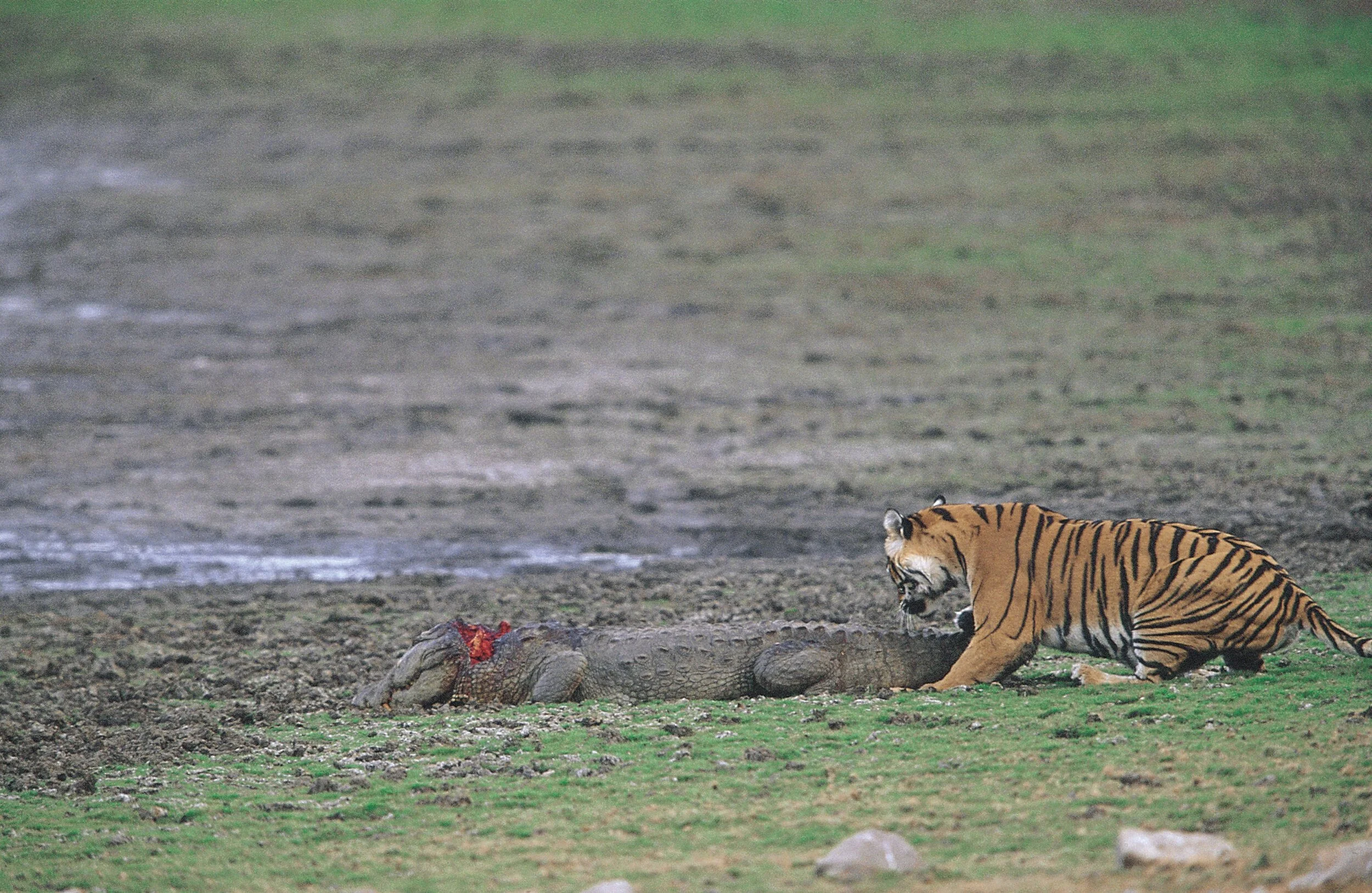
Machli beside the crocodile she has killed, Rajbagh · 2003
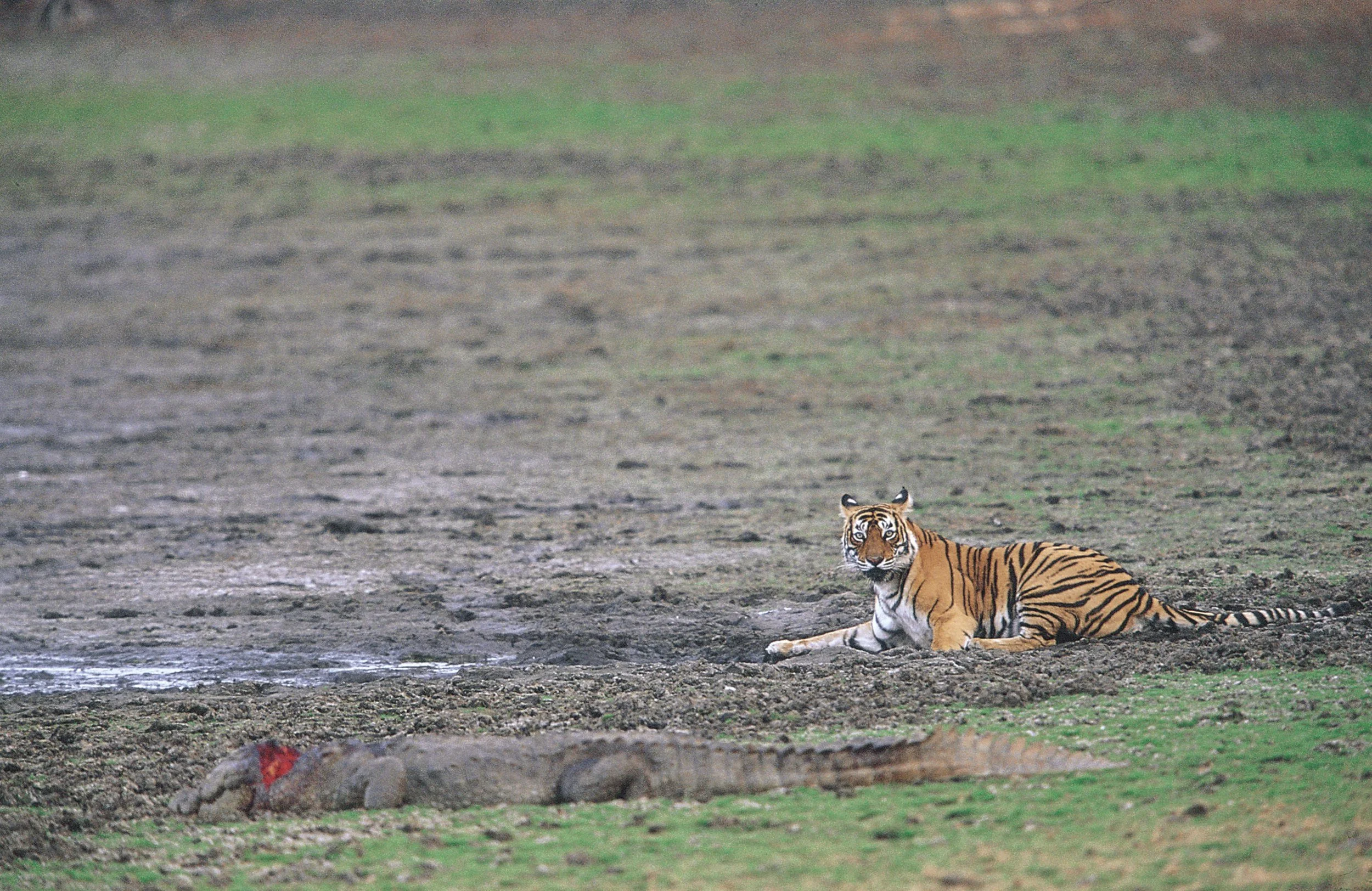
Resting beside the crocodile on the dry bed of the lake · 2003
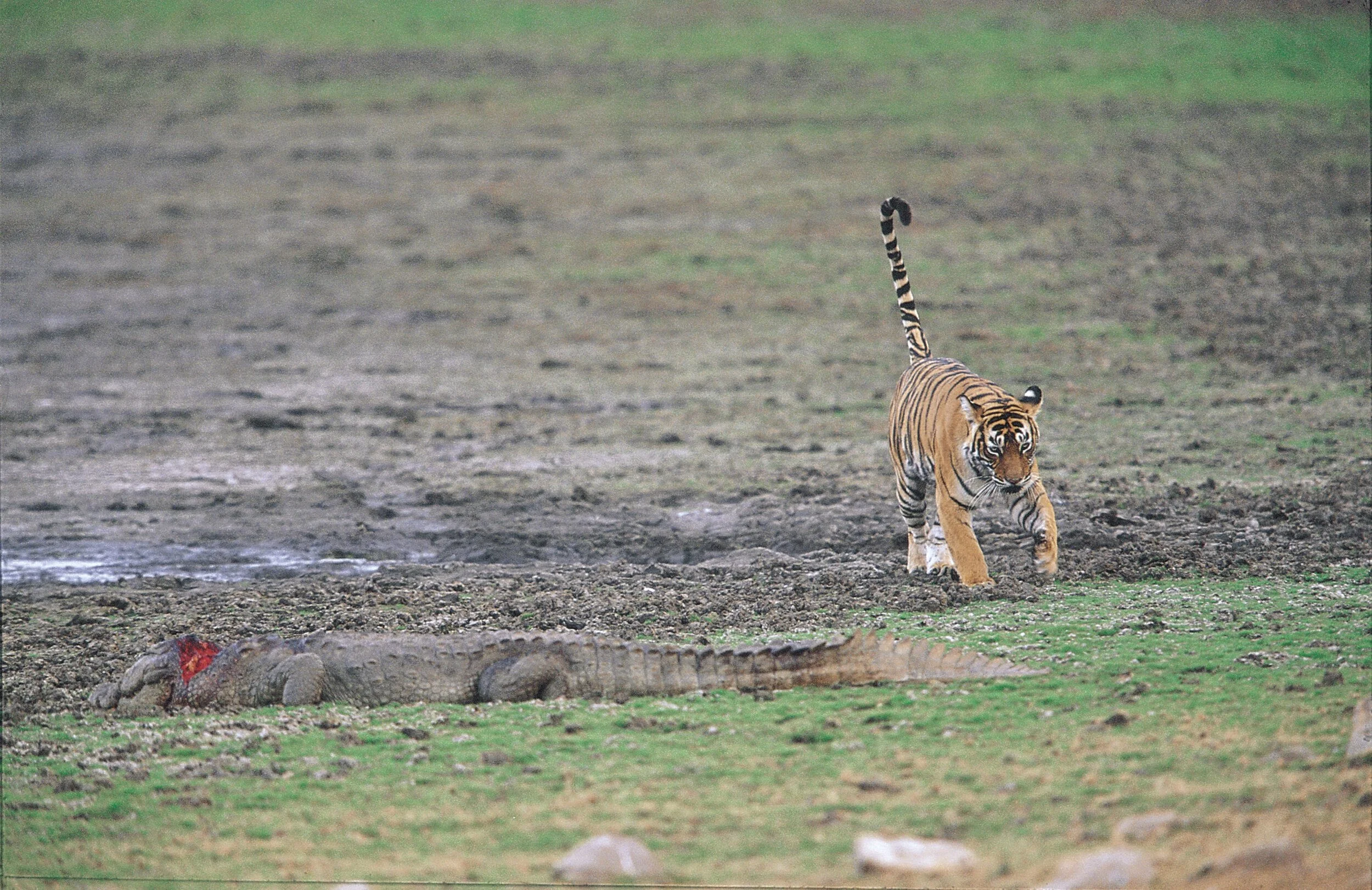
Walking away from the kill · 2003
Third litter
In March 2005 she produced a male and a female, Bahadur (T-3) and Sharmilee (T-1). Sharmilee’s story runs beyond Ranthambhore: in 2008 she was flown to Sariska, the reserve that had lost every one of its tigers to poaching, and there — renamed ST-2 and later called Rajmata — she became the founding mother of Sariska’s new tiger population. She died in January 2024, aged nineteen.
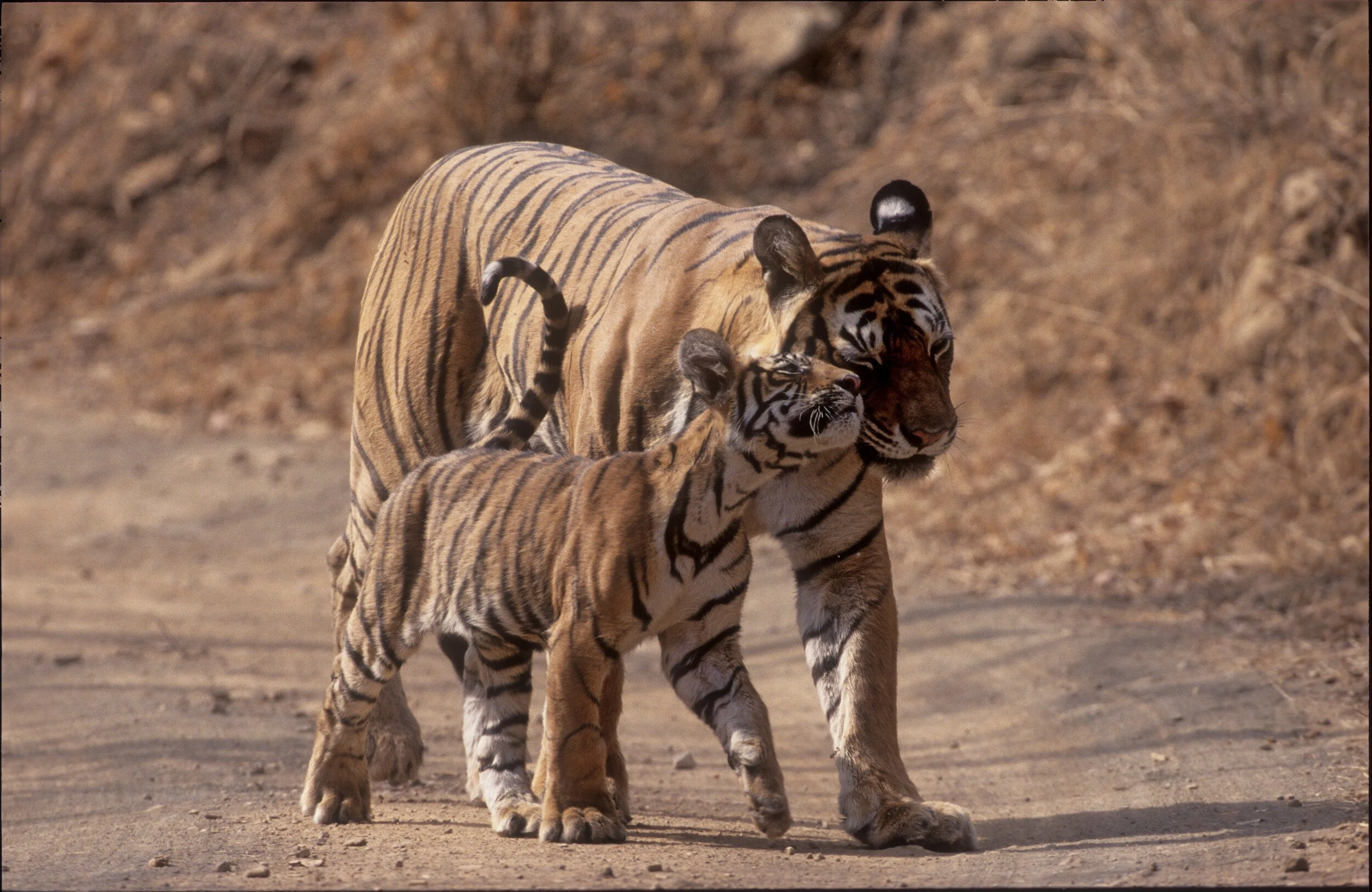
Machli walking the track with a cub of her third litter · 2005
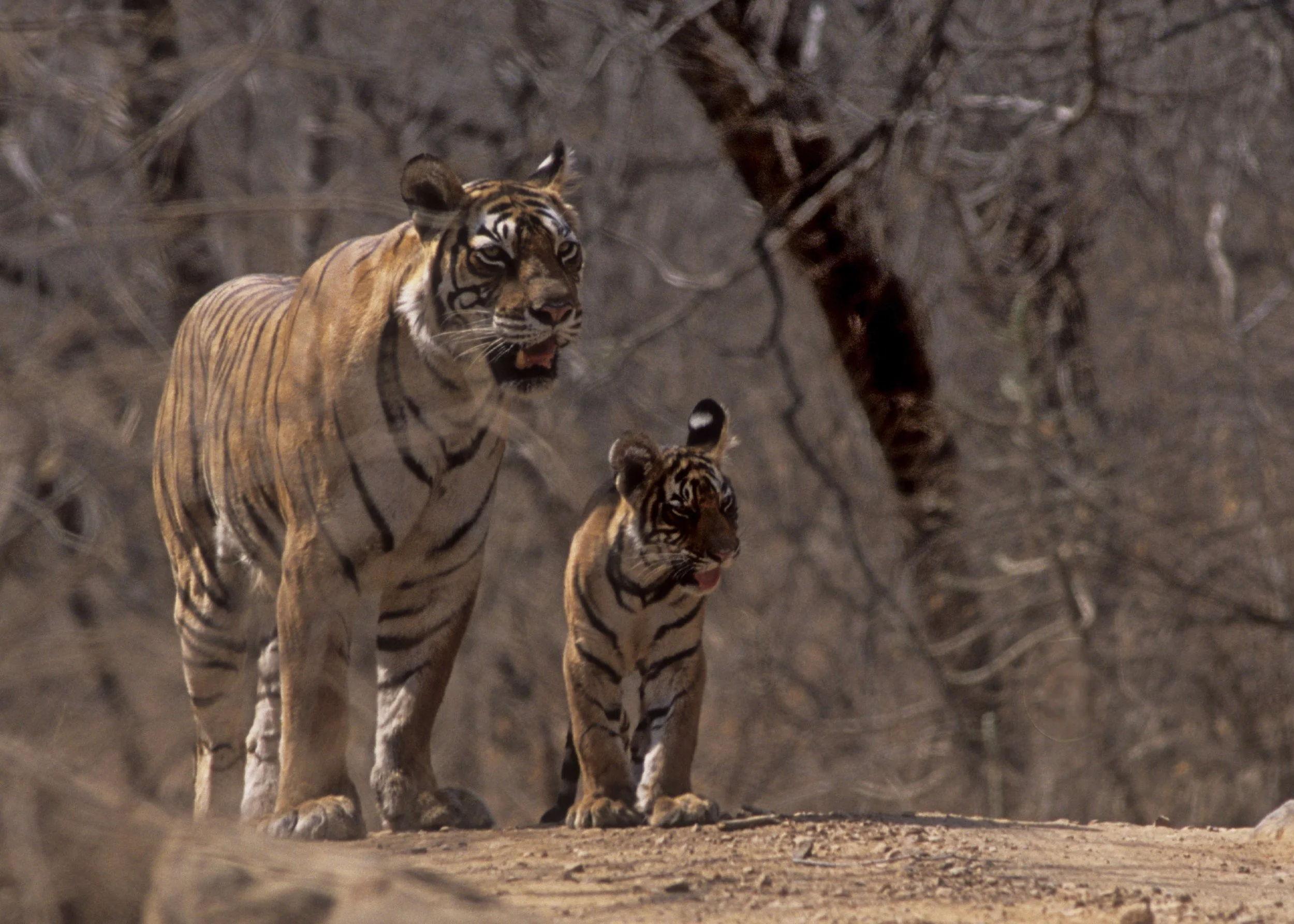
Machli and a cub of the third litter on the forest track · 2005
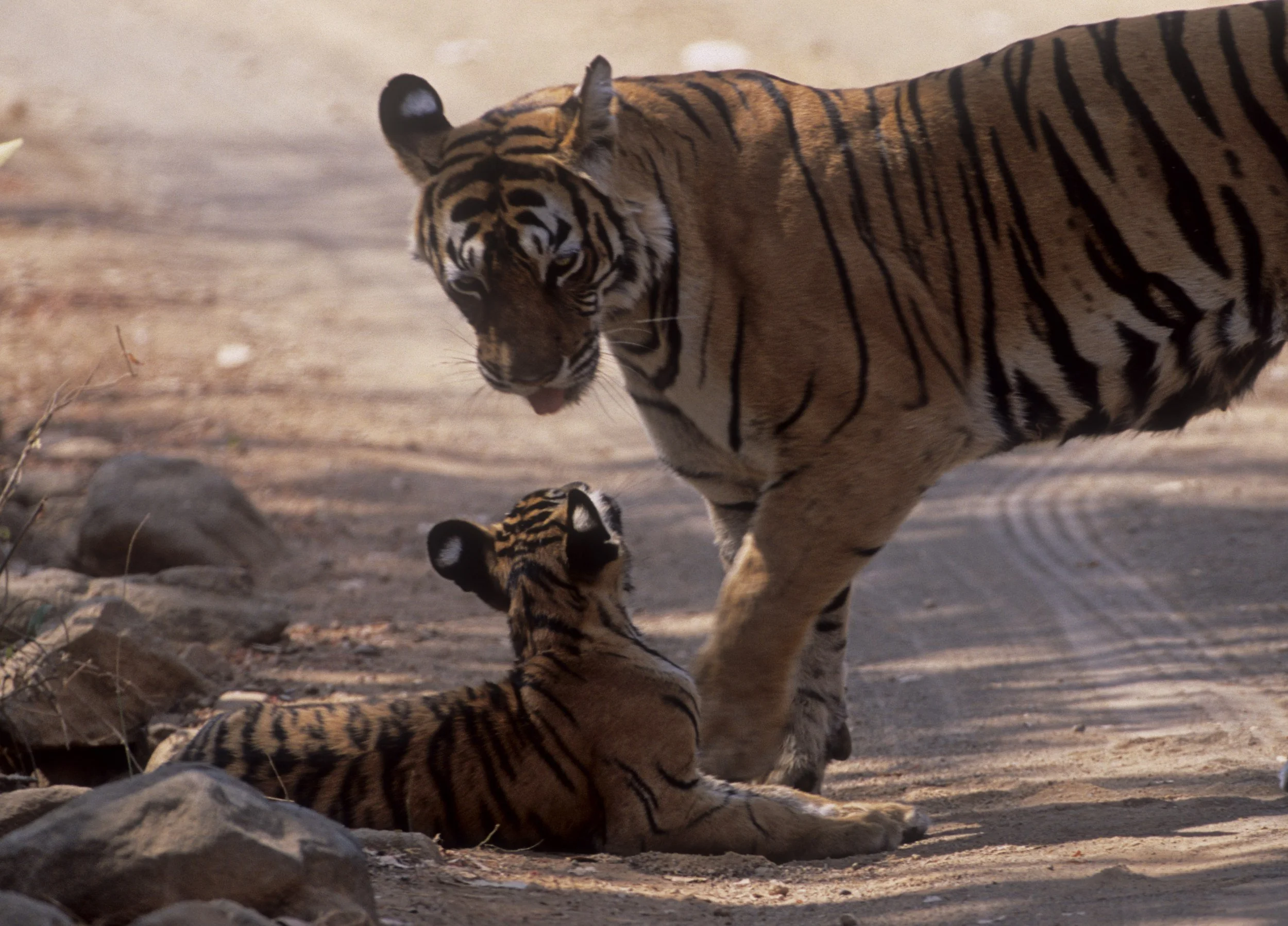
A cub at her feet, Bahadur or Sharmilee · 2005
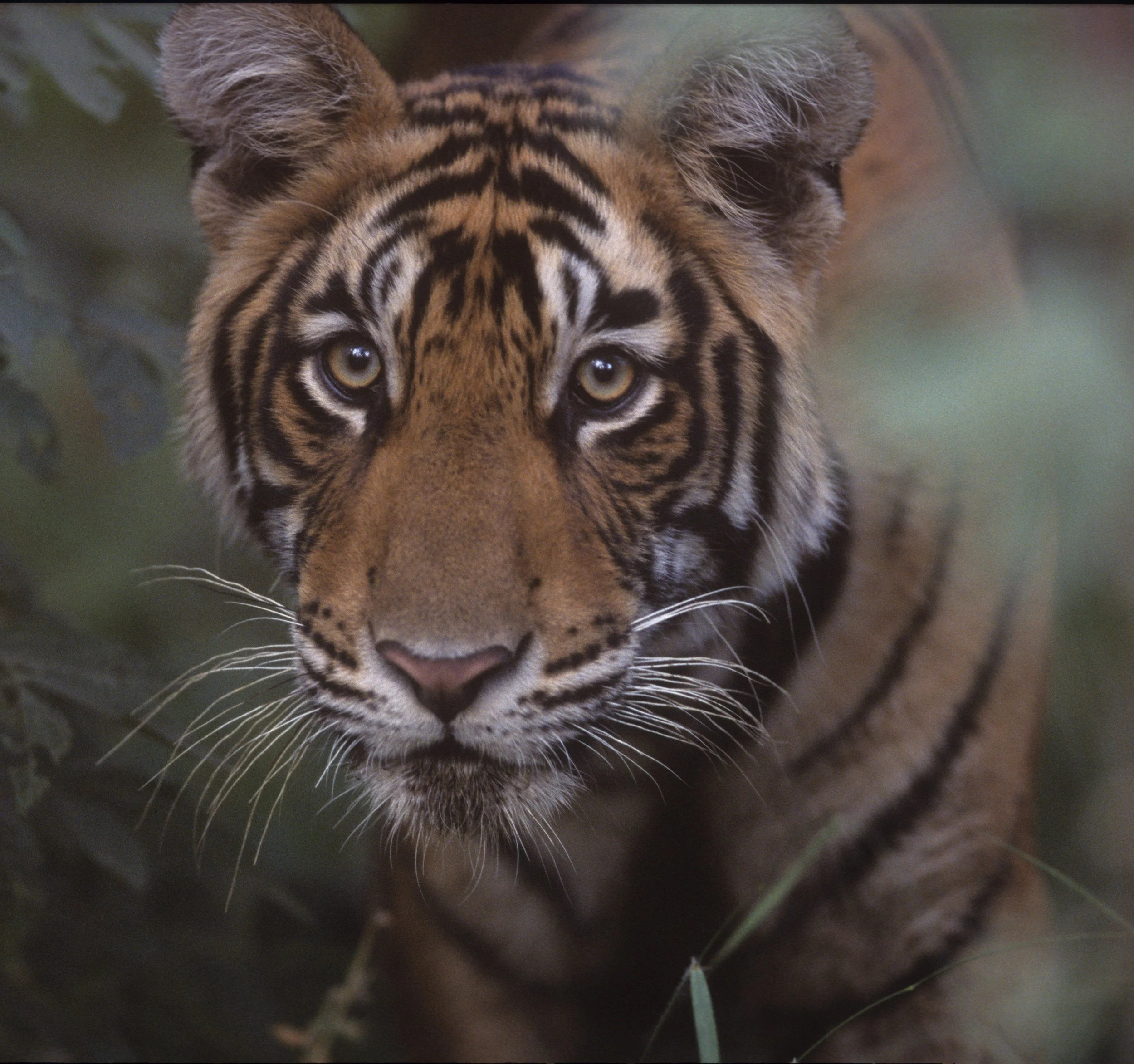
Portrait in the undergrowth · 2005
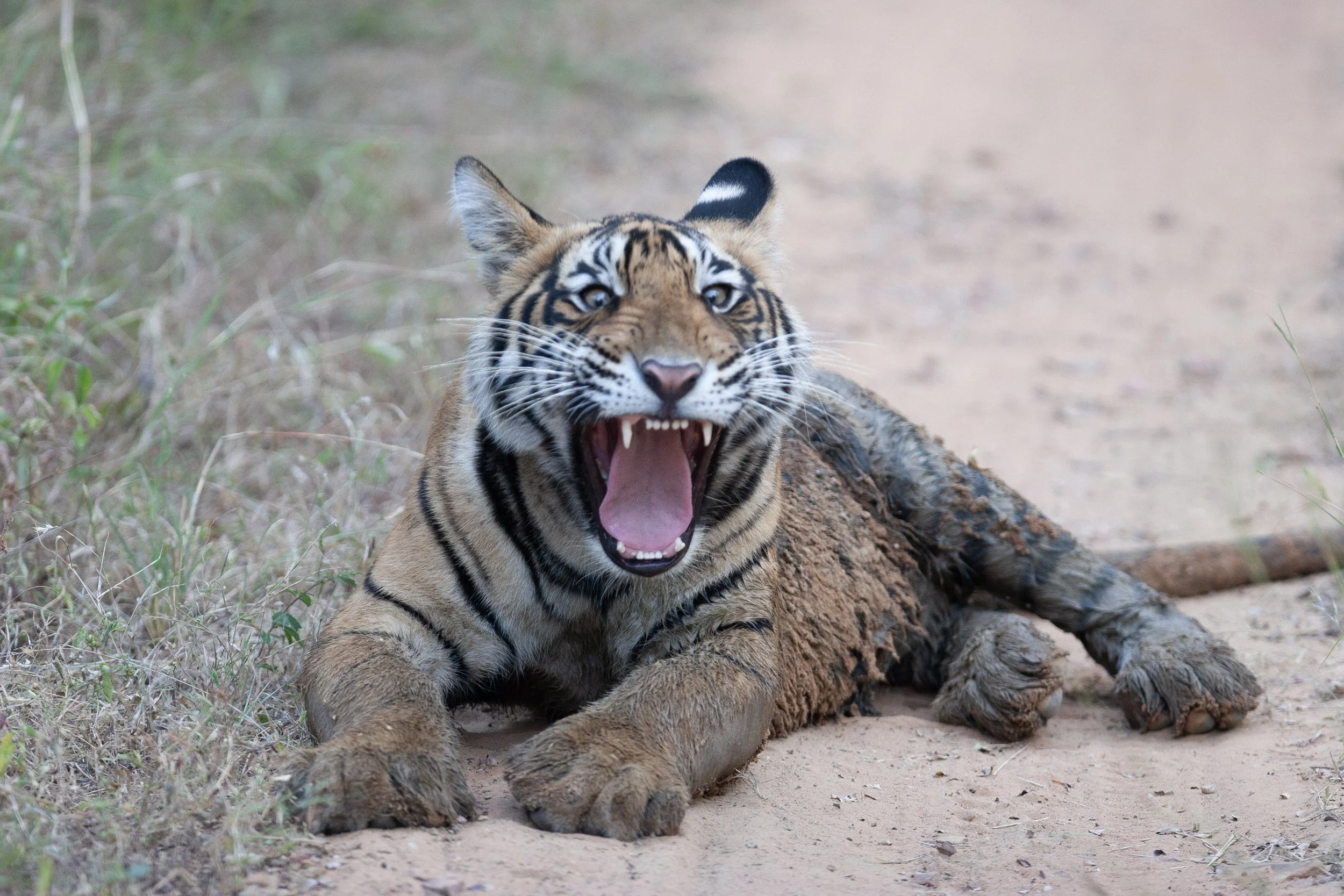
A third-litter cub yawning on the track · 2005
Fourth litter
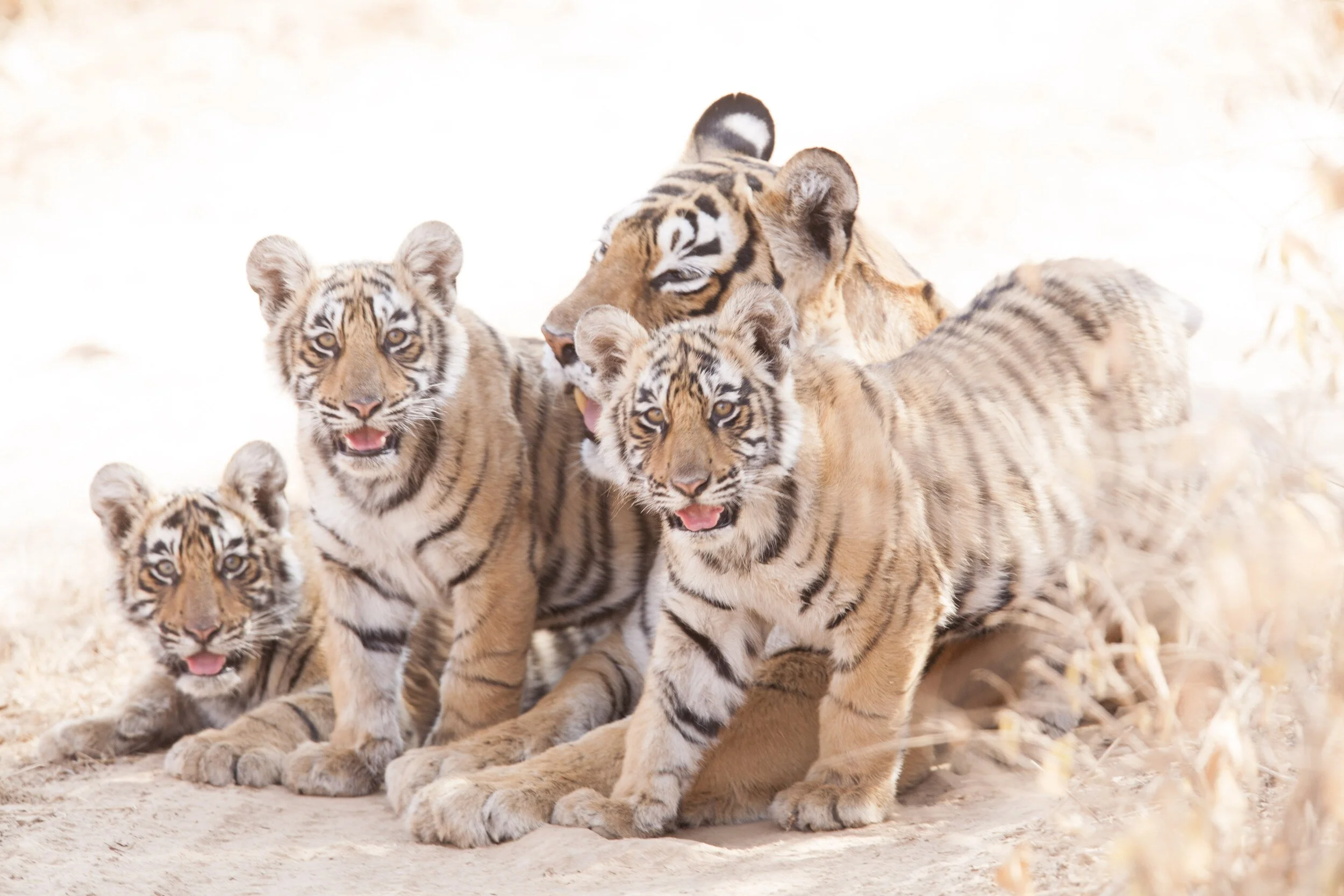
Her last litter, three daughters born in late 2006, is the one Nanak Dhingra photographed most. These are the frames from 2007 and 2008: the four of them together on the forest track, the cubs on a fallen tree, in a rock pool in the summer heat, crossing the lake in single file, and two of them sparring in the dust as they came of age. Of these three, T-18 went to Sariska as ST-3; T-17 Sundari took over her mother’s lakes and vanished in 2013; and T-19 Krishna became the matriarch of the next generation.
Machli was pushed off the lakes by her own daughter Sundari around 2009, and lived out her last years on the edge of the park, toothless, half-blind, fed by the forest department. In April 2009 the Travel Operators for Tigers gave her a lifetime achievement award — the first ever given to a wild animal — estimating that she had brought around ten million dollars a year into Ranthambhore’s economy. In 2013 India Post issued a commemorative cover in her name. She died on 18 August 2016, at nineteen or twenty, and was cremated with full honours by the people who had watched her all her life.
Roughly half the tigers in Ranthambhore today are thought to carry her blood. Her granddaughter Arrowhead held the lakes until 2025; Arrowhead’s daughter Riddhi holds them now. Nanak Dhingra’s son Sahil photographed that generation — Riddhi, Durga and Shakti, with cubs of their own — in the summer of 2026. His series, Legacy, picks up the story where these photographs leave off.
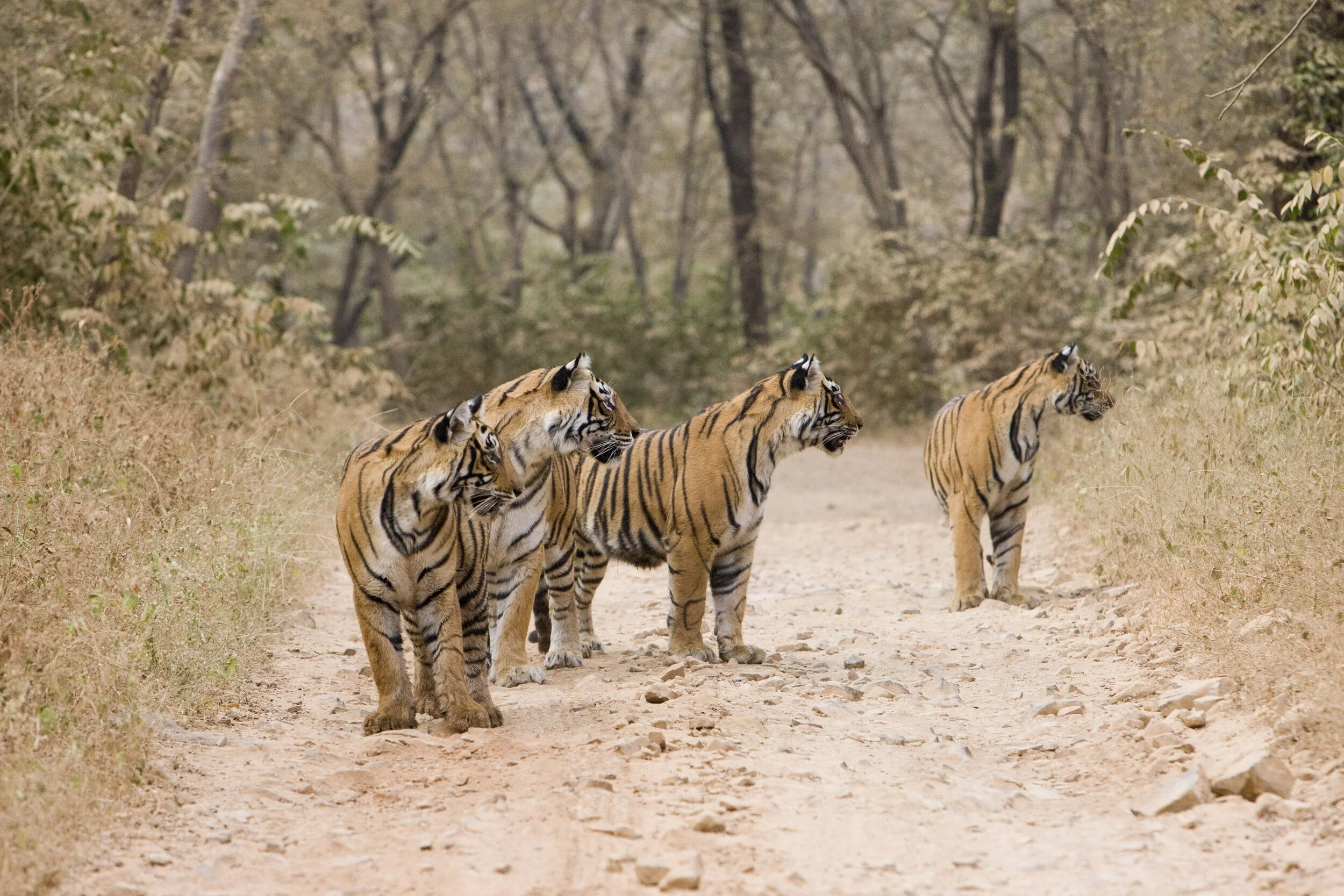
The family on the forest track, all four looking the same way · 2007
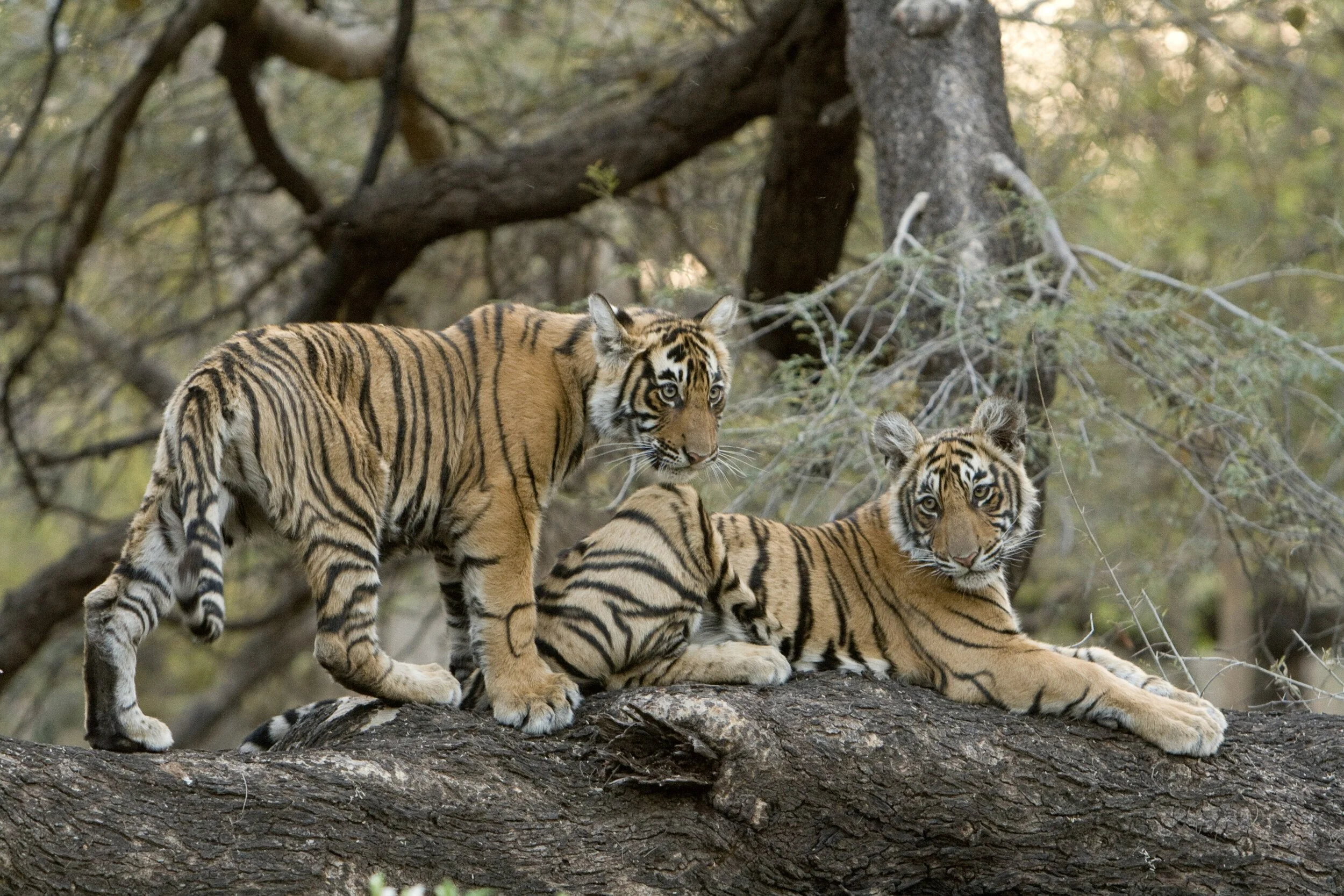
The three cubs on a fallen tree · 2007
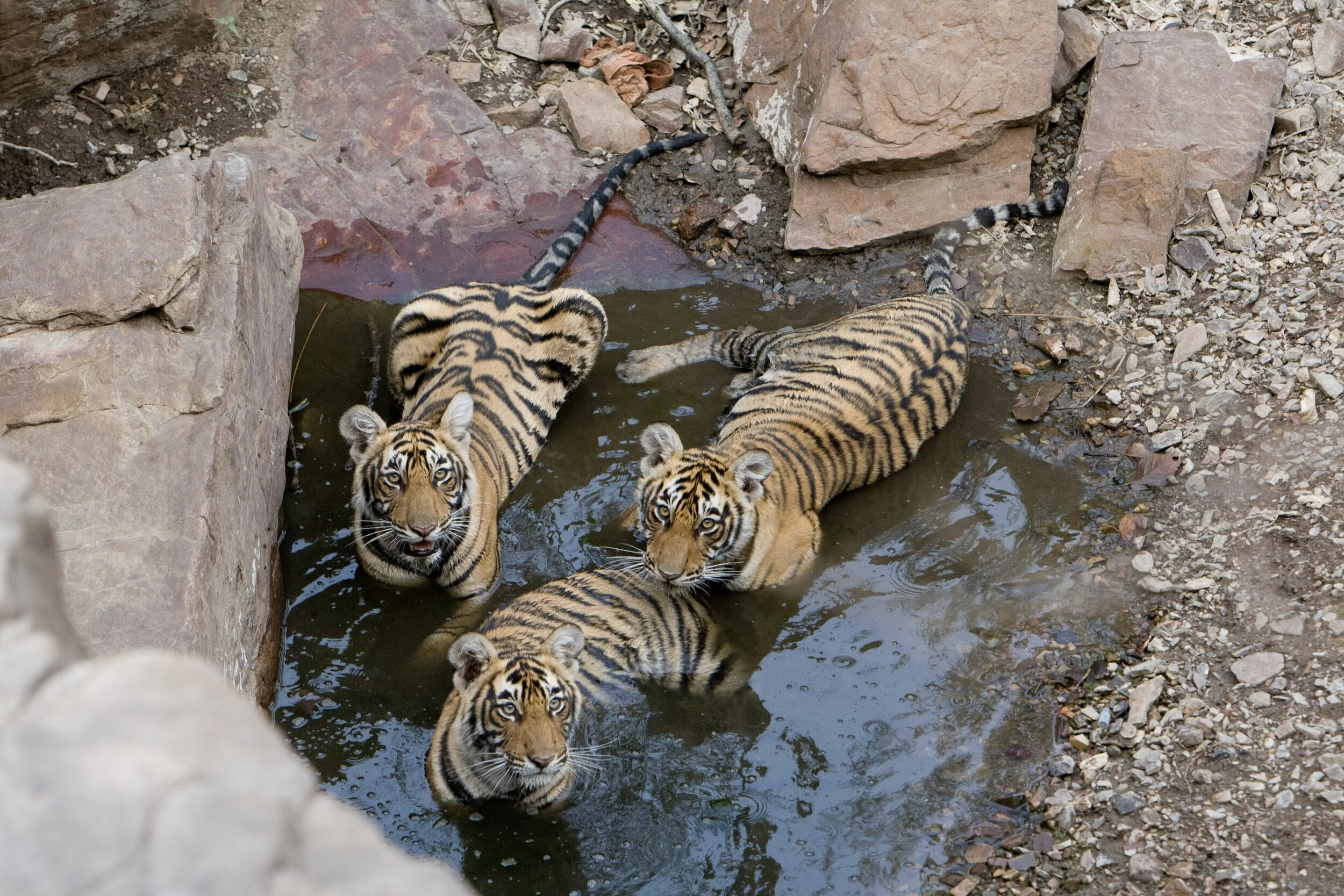
Cooling off in a rock pool · 2007
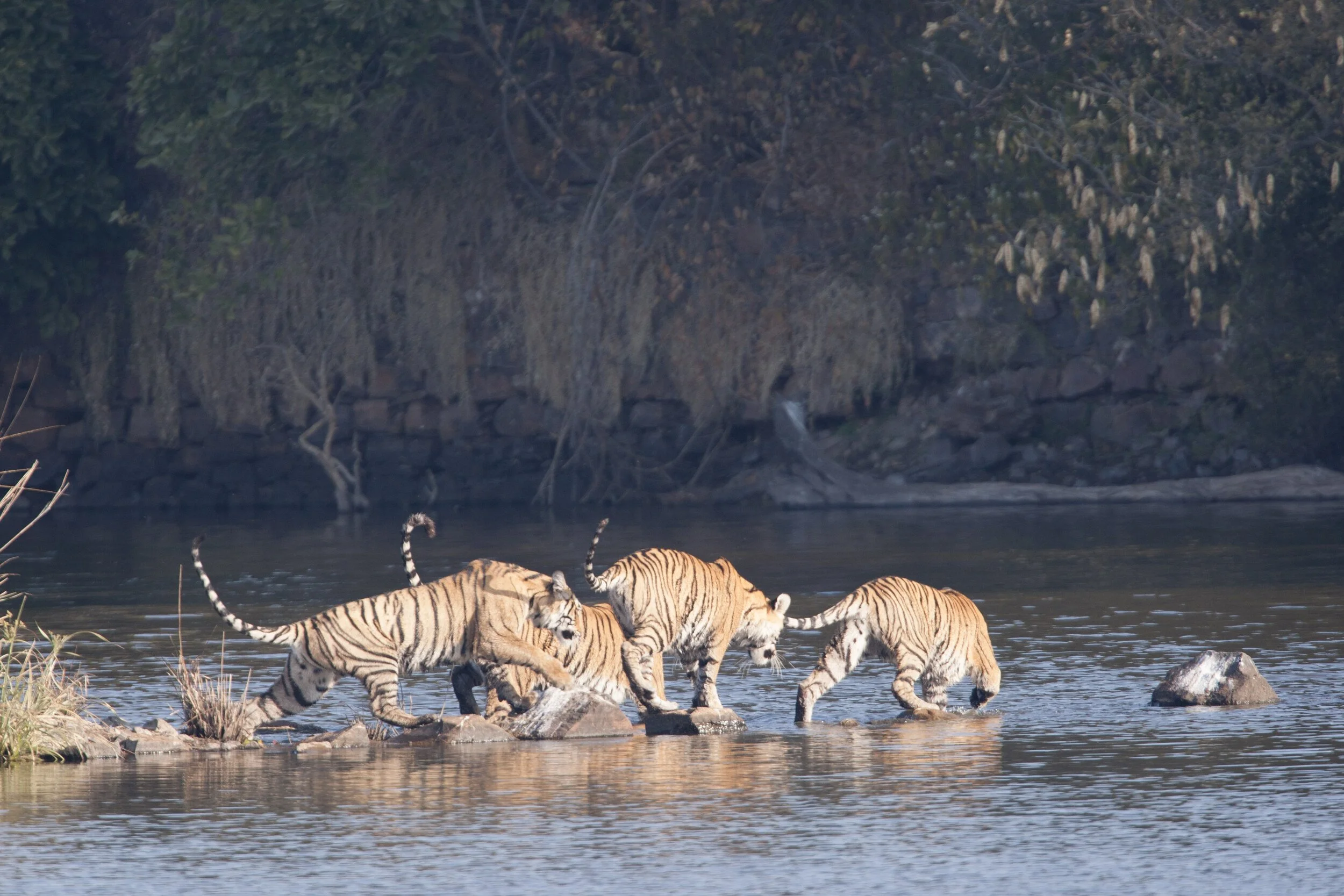
Crossing the lake in single file · 2008
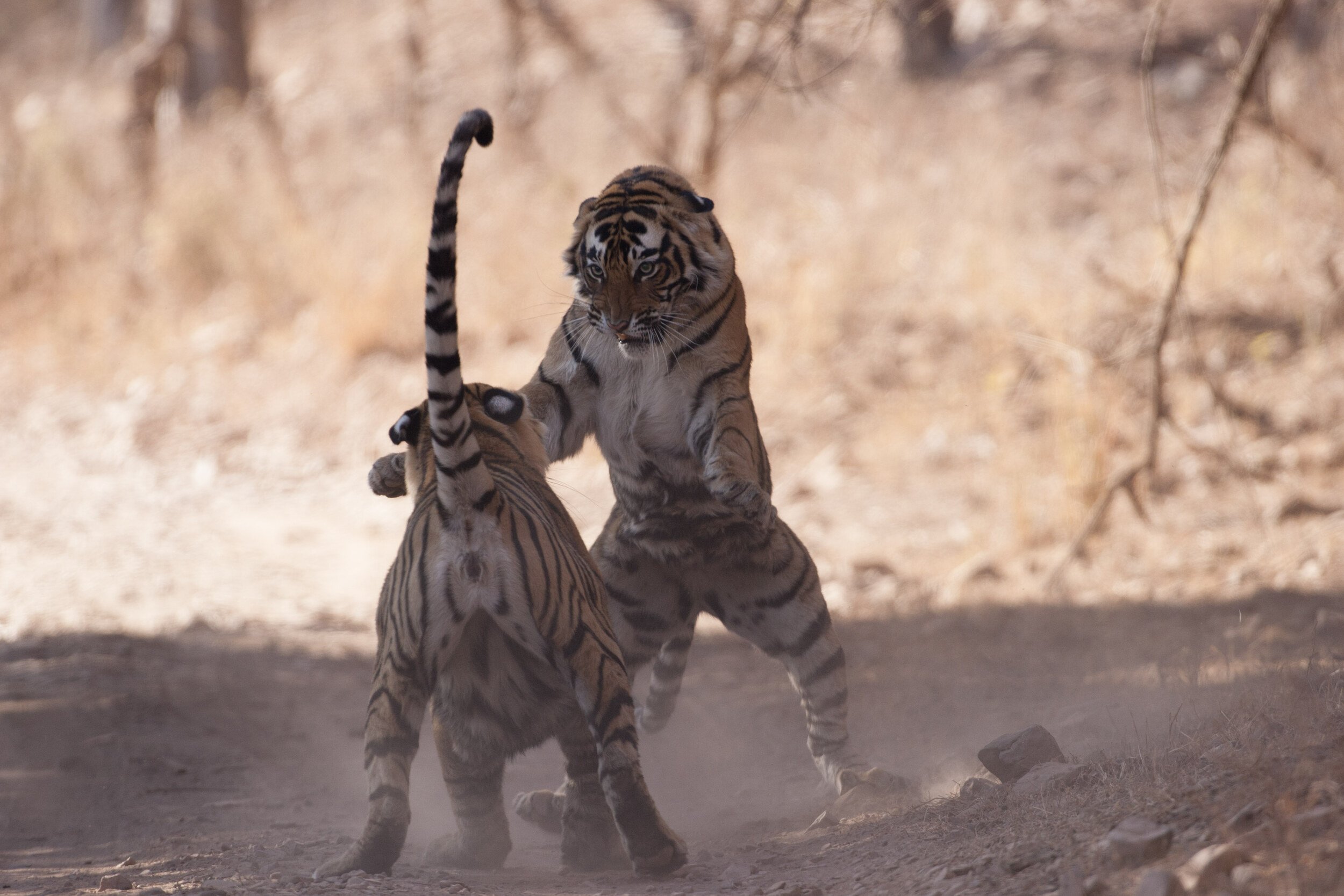
Sundari (T-17) and Krishna (T-19) sparring · 2008